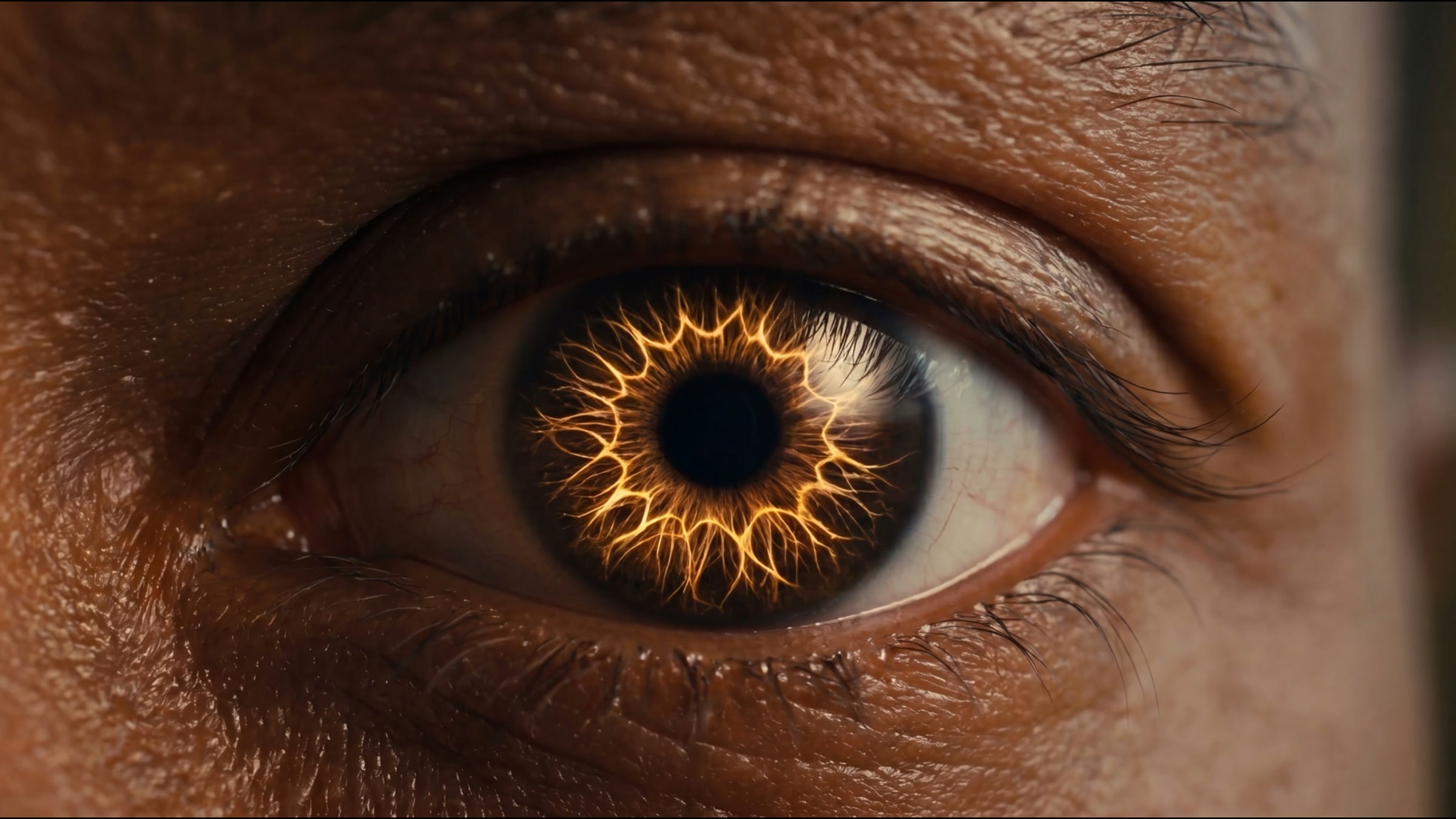
Via Linda SymposiumThrough Their Eyes
- ClientVia Linda Behavioral Hospital
- Year2026
- ScopeCreative direction, identity, film, live show control
- FormatAccredited one day symposium, 200+ in the room
What it takes to make a room believe you.
A symposium is not a video project. It is an accredited day where every screen, every surface and every printed page has to say the same thing, or the day does not hold together.
Make a clinical subject feel human.
Via Linda was presenting innovations in the treatment of trauma to a room of clinicians, executives and referrers. The subject was serious, technical, and easy to make cold. It had to land as something felt, not something reported.
One image, extended everywhere.
The work started from a single iris and a rule for how it behaves. Everything after that was an extension of it: title film, speaker intros, break media, print, signage, merchandise and the recap, all cut from the same cloth.
Ran a full day, then kept running.
The work carried an accredited programme from doors to close, and was recut for continuing education afterward, so the same films that held the room now carry the credit hours.
The audio-visual was wonderful, highly engaging and interactive.
One idea, extended to every surface in the room.
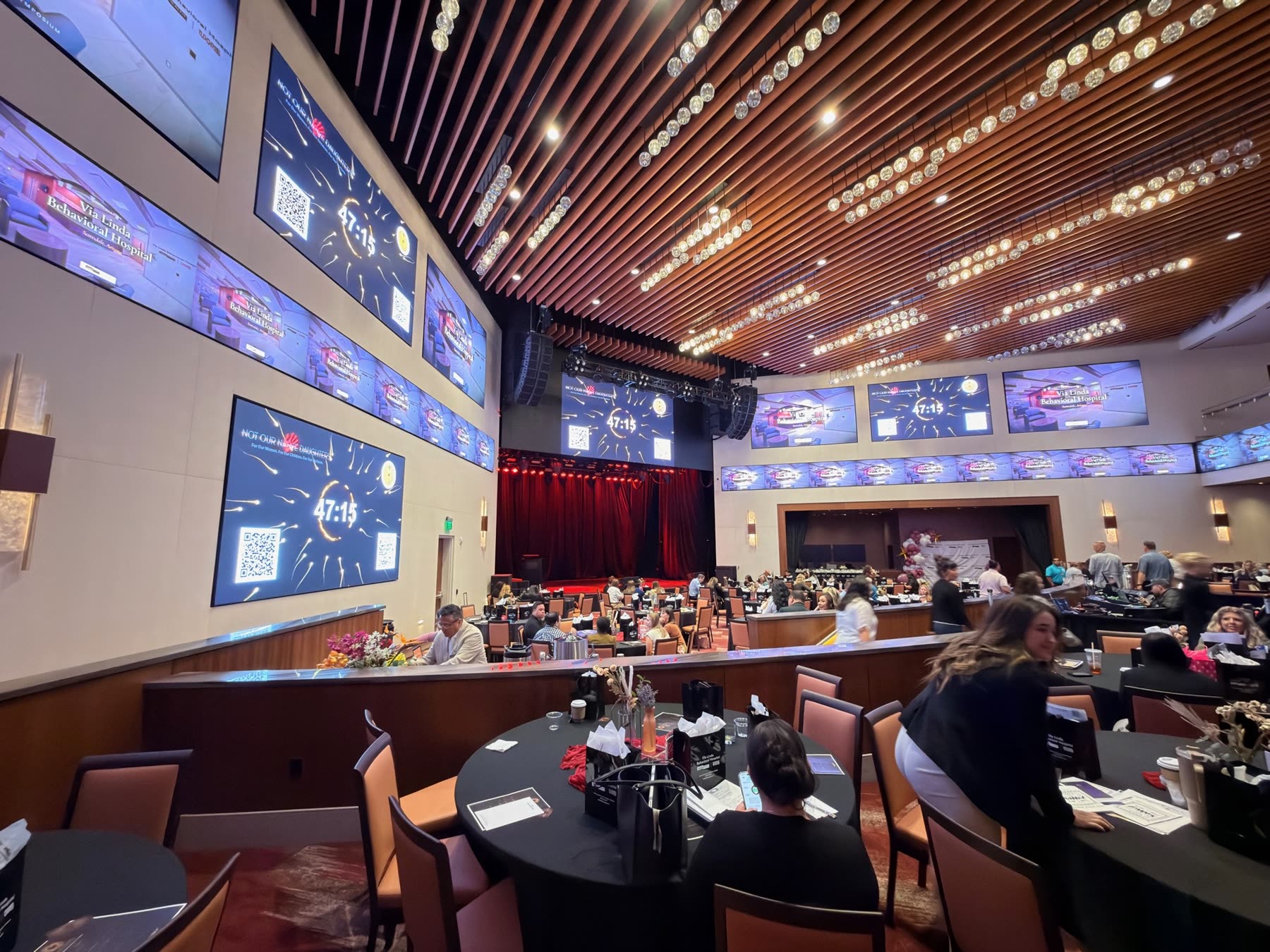
The canvasEighteen across the back wall alone, six more flanking the stage, twin video strips wrapping onto the side walls, and a curved ribbon over the bar.
Fifteen pieces, one voice.
Every item below was cut from the same key art, so the day read as one piece of work instead of fifteen.
- 01Event logo system
- 02Event key art
- 03Print agenda
- 04Seating chart
- 05Welcome signage
- 06Merchandise
- 07Opening film
- 08Speaker intro films
- 09Session backdrops
- 10Break media
- 11Round table media
- 12Closing film
- 13Show control
- 14Multicamera capture
- 15Recap and CEU cuts
The room decides in seconds. Everything else is preparation.
A Picture, Not a System
The concept arrived already decided. An internal email circulated it through the hospital as the theme for posters, workbooks and the overall brand of the event, and the covering note said both versions were intended to be used.
One was a chrome brain in cobalt and electric blue, floating on grey, with a white rectangle patched across its underside where the cutout had failed. Neither version used a single colour from the hospital's own brand guidelines.
We did not iterate it. We replaced it.
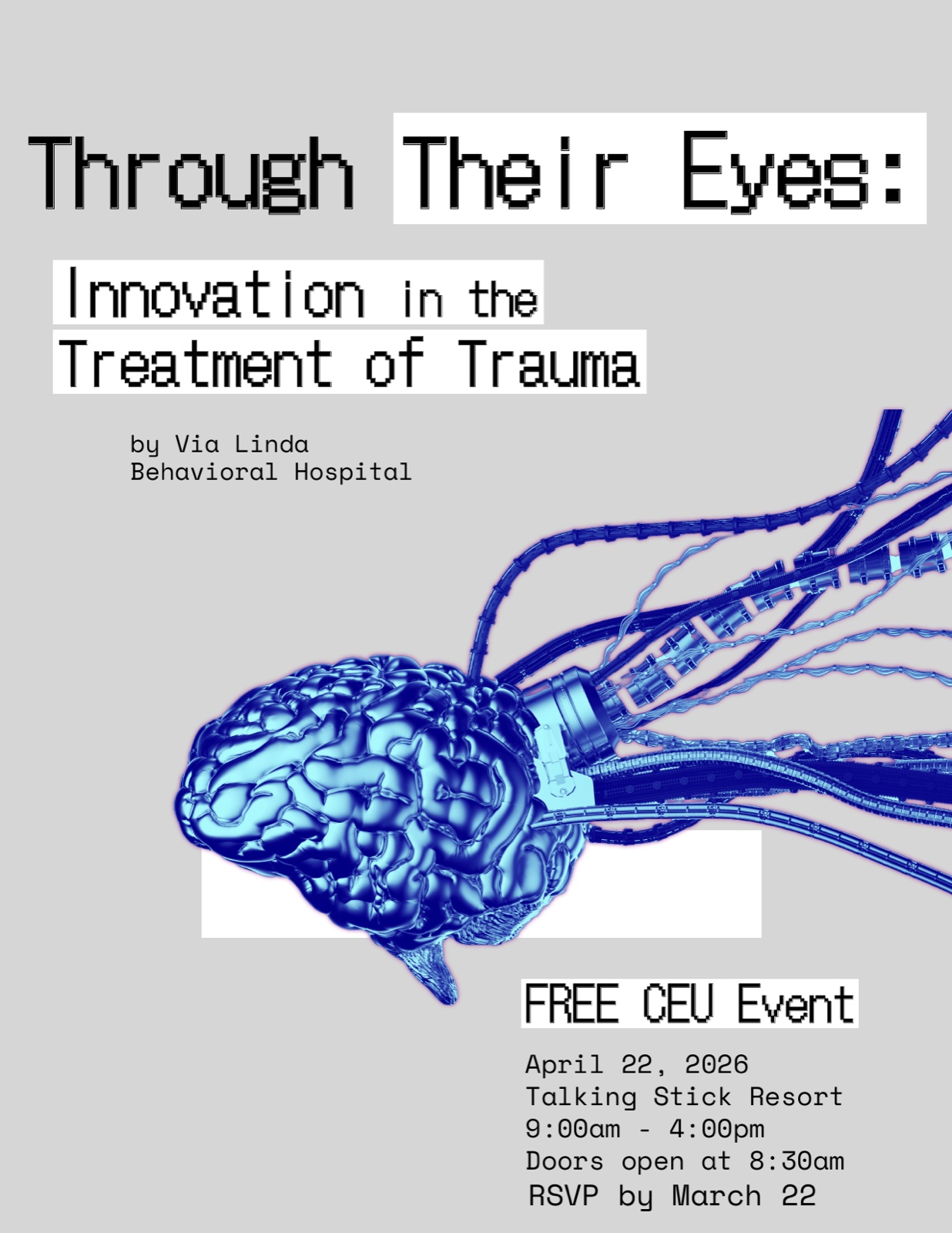
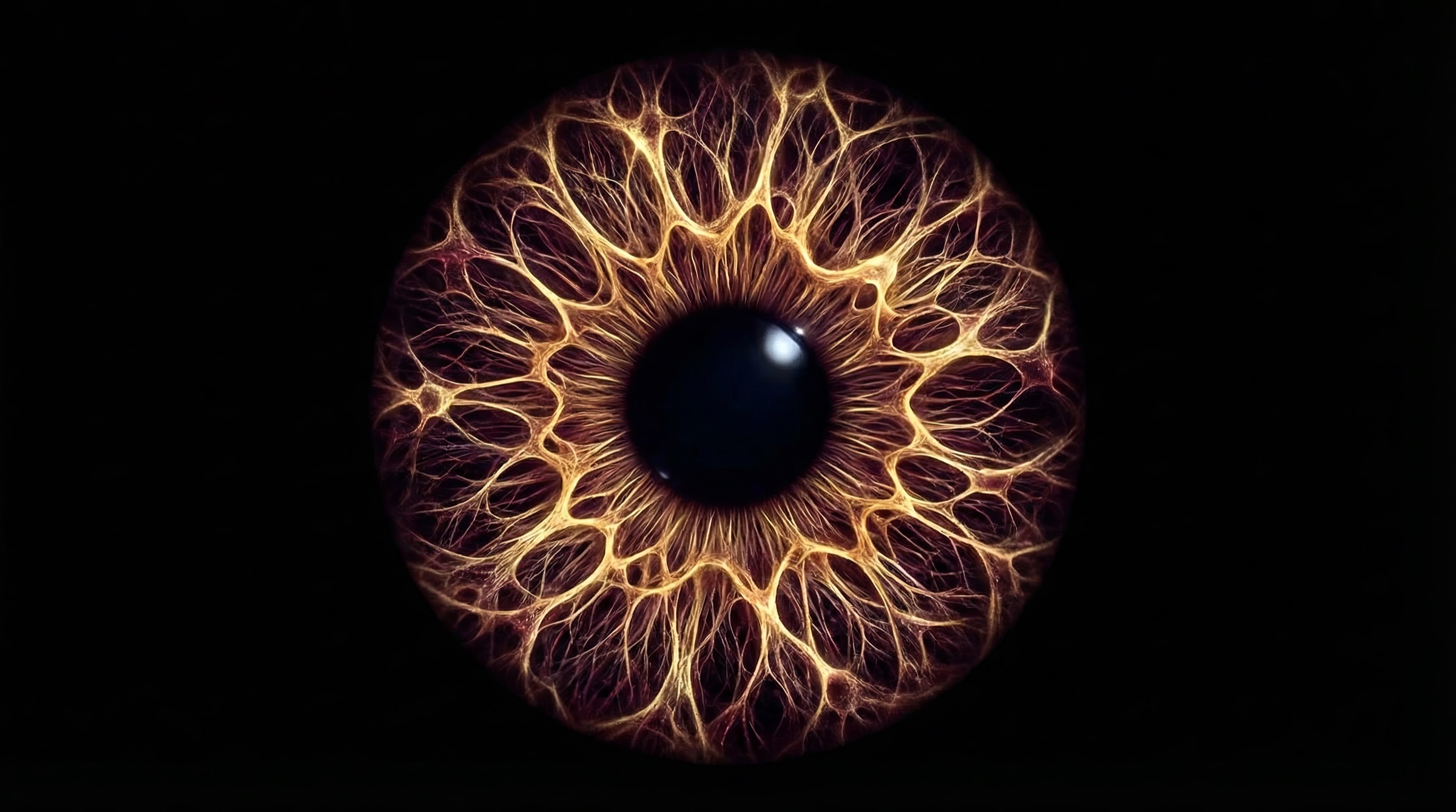
The concept as received, and what replaced it.
Emergence
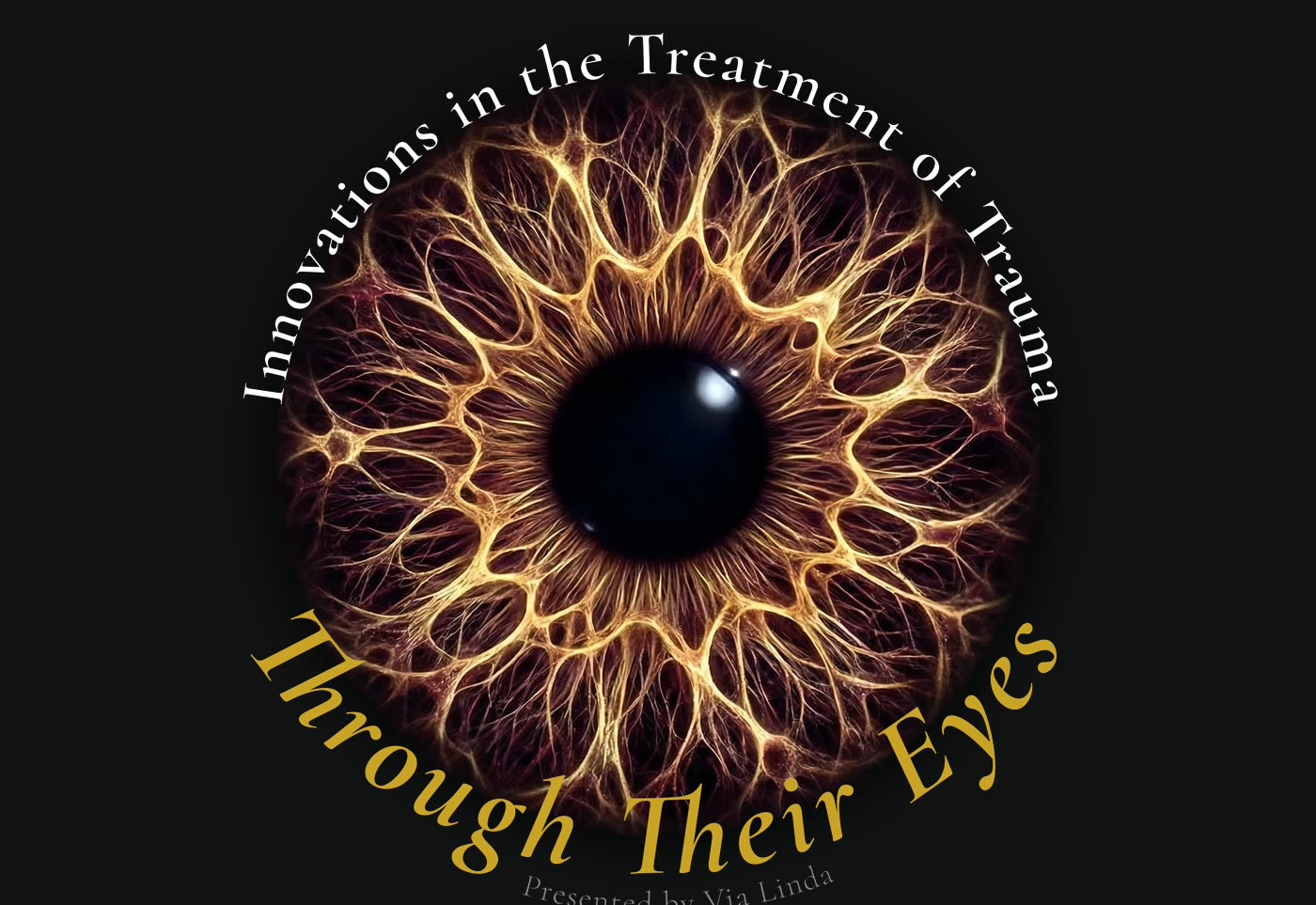
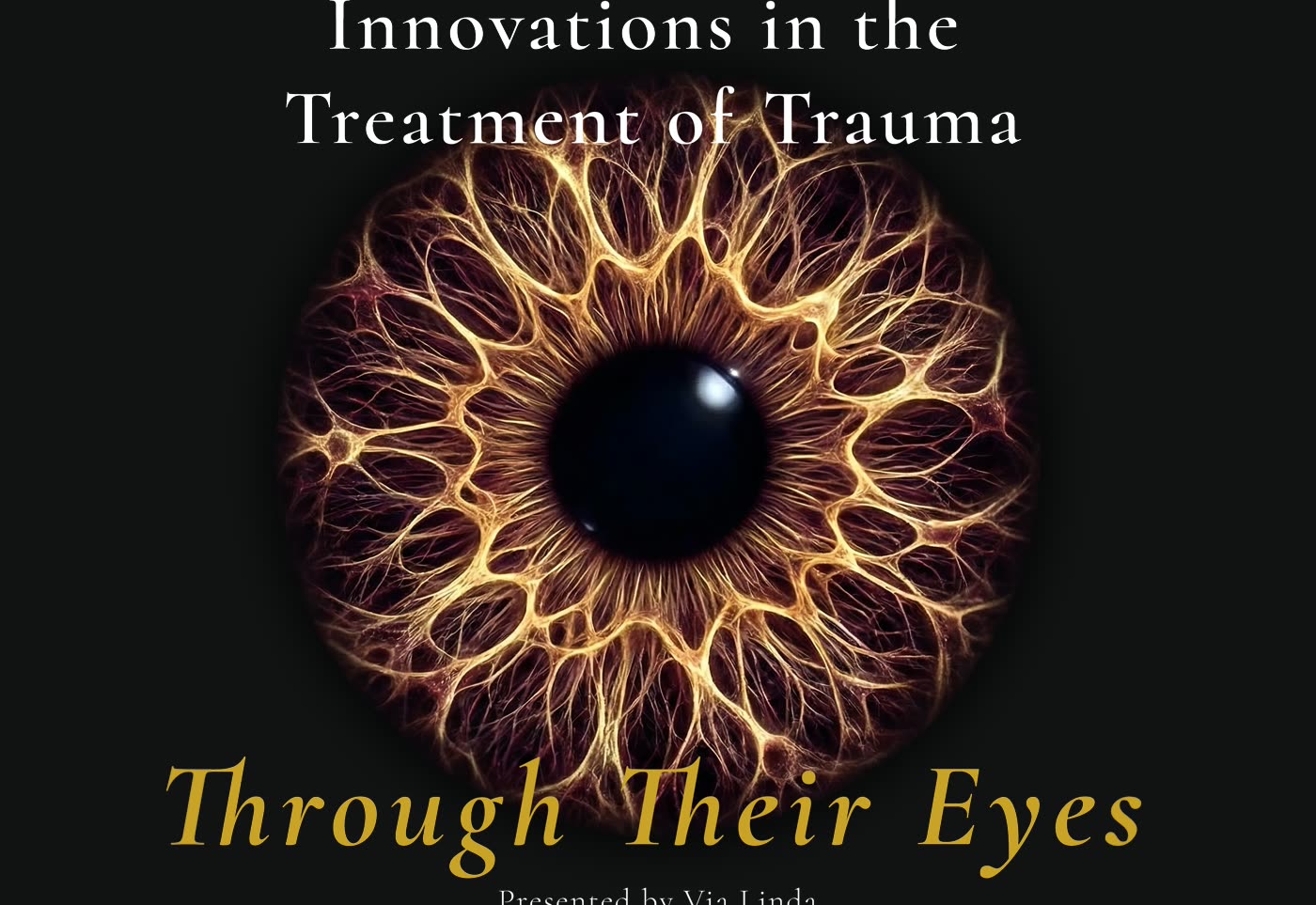
We named the concept Emergence: an iris woven from neural pathways, gold light moving through the connections like synapses firing. One iris for the moments meant to turn a person inward. Two eyes for the moments meant to connect them to someone else.
The pupil stays dark until it doesn't. A single point of light appears, and the eye is seeing.
The palette came out of the venue. Two colours from the hospital's guidelines, one gold that is in no guideline anywhere, and a near-black ground matched to the room, so that when someone looked up at the screens and back down again the two would agree.
This was designed for this space.
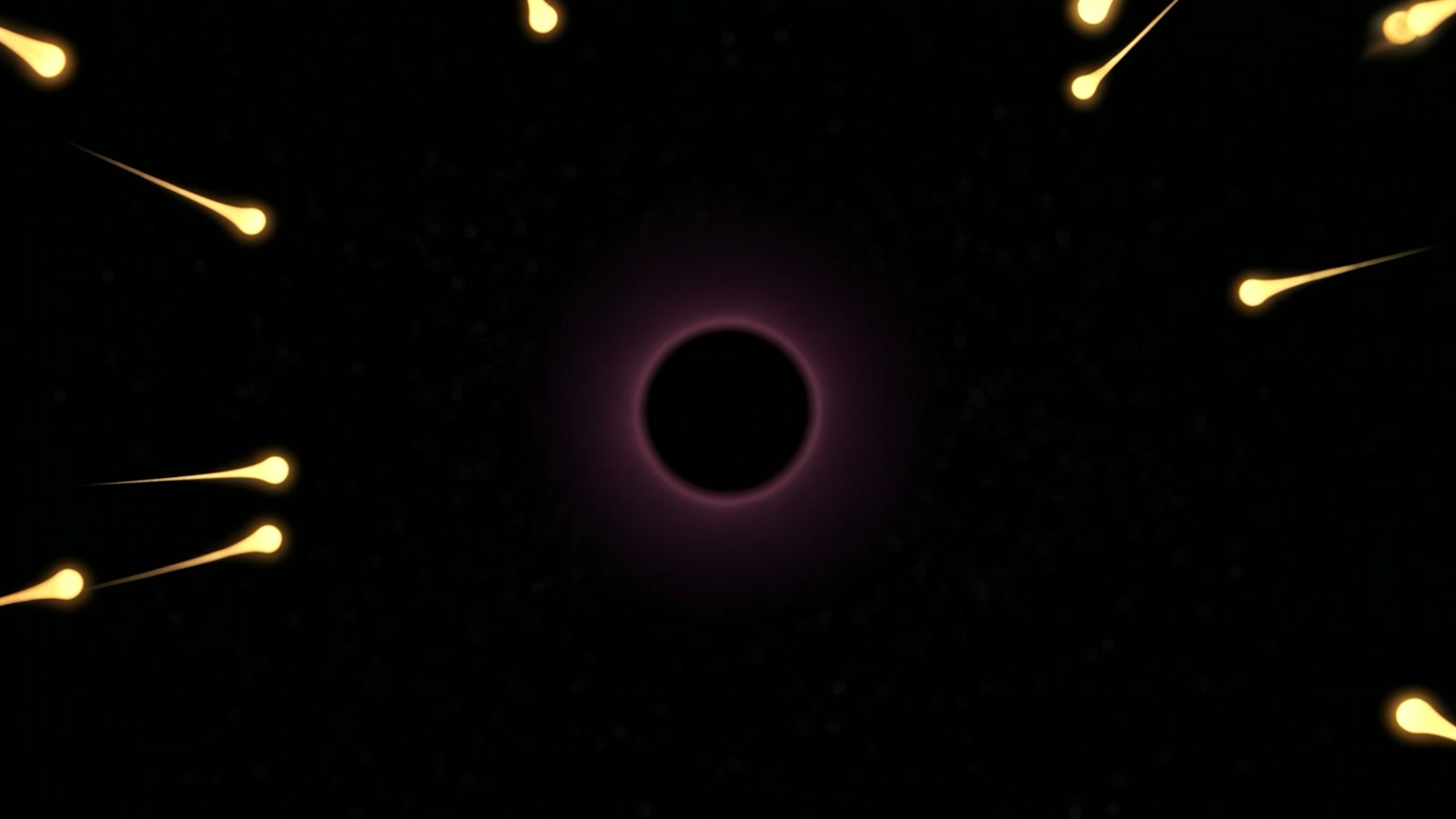
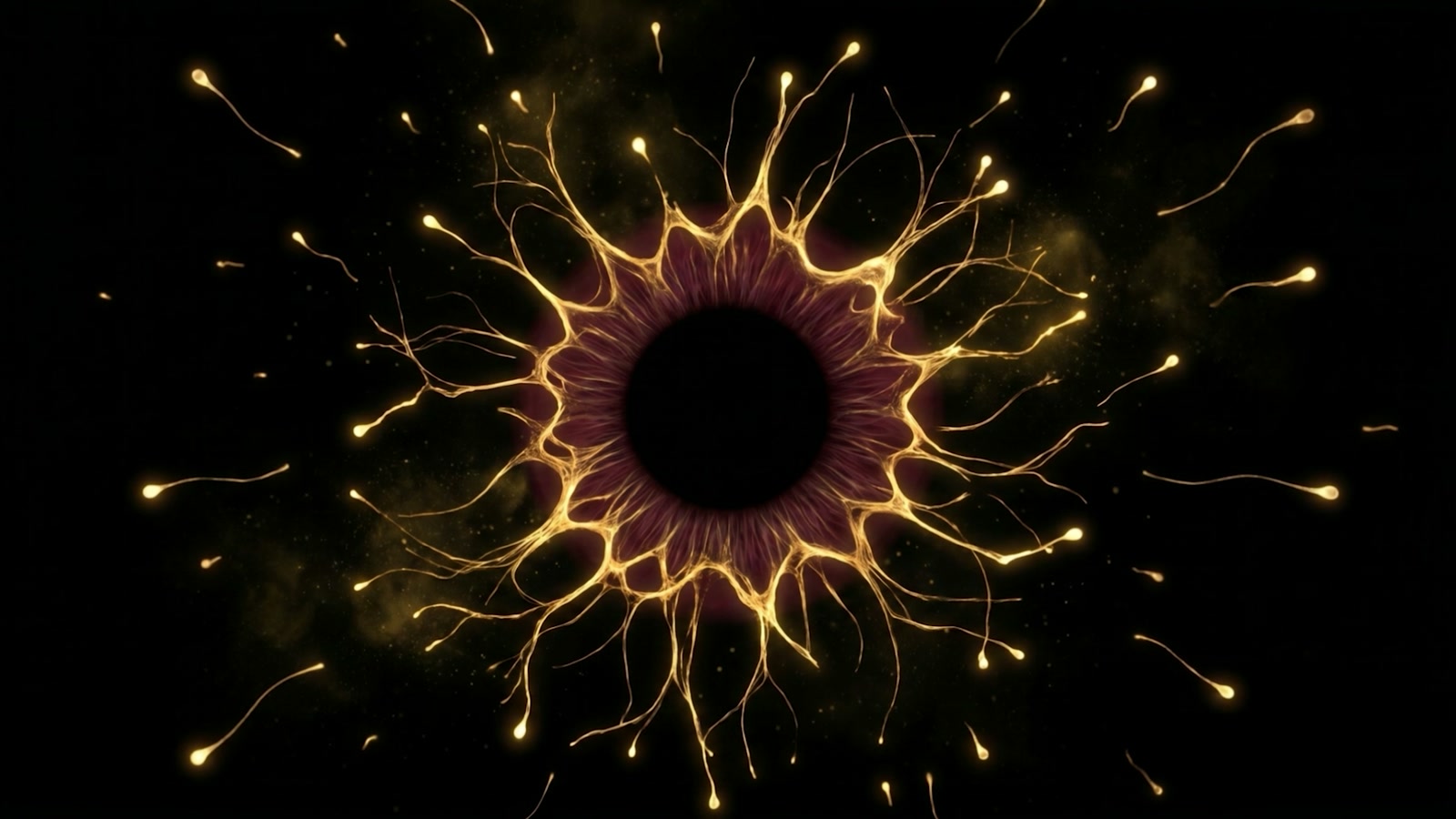
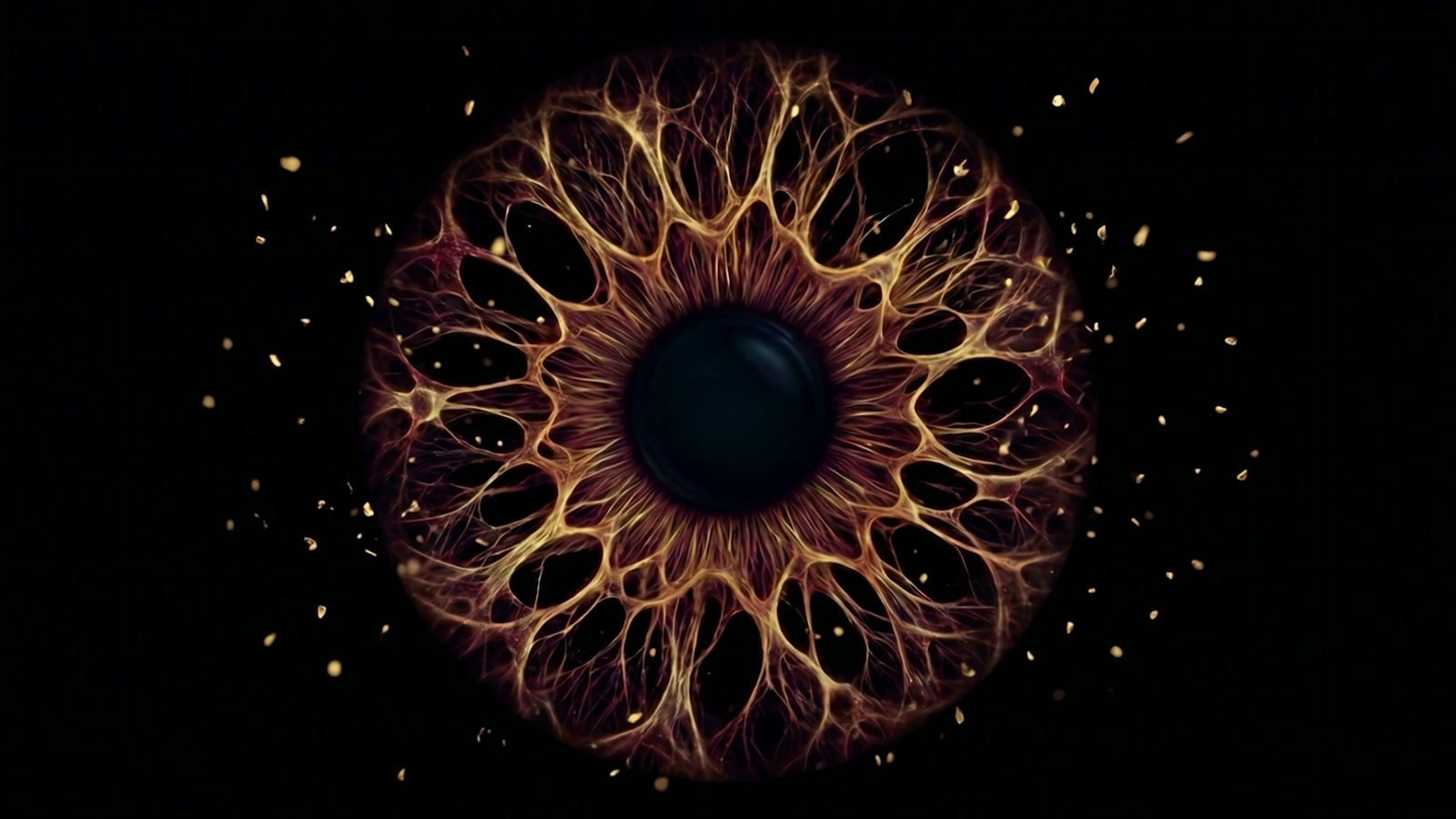
The break piece, being born. Stillness, Awakening, Reaching, Full Emergence, Release: five phases, looping, while the room recovered.
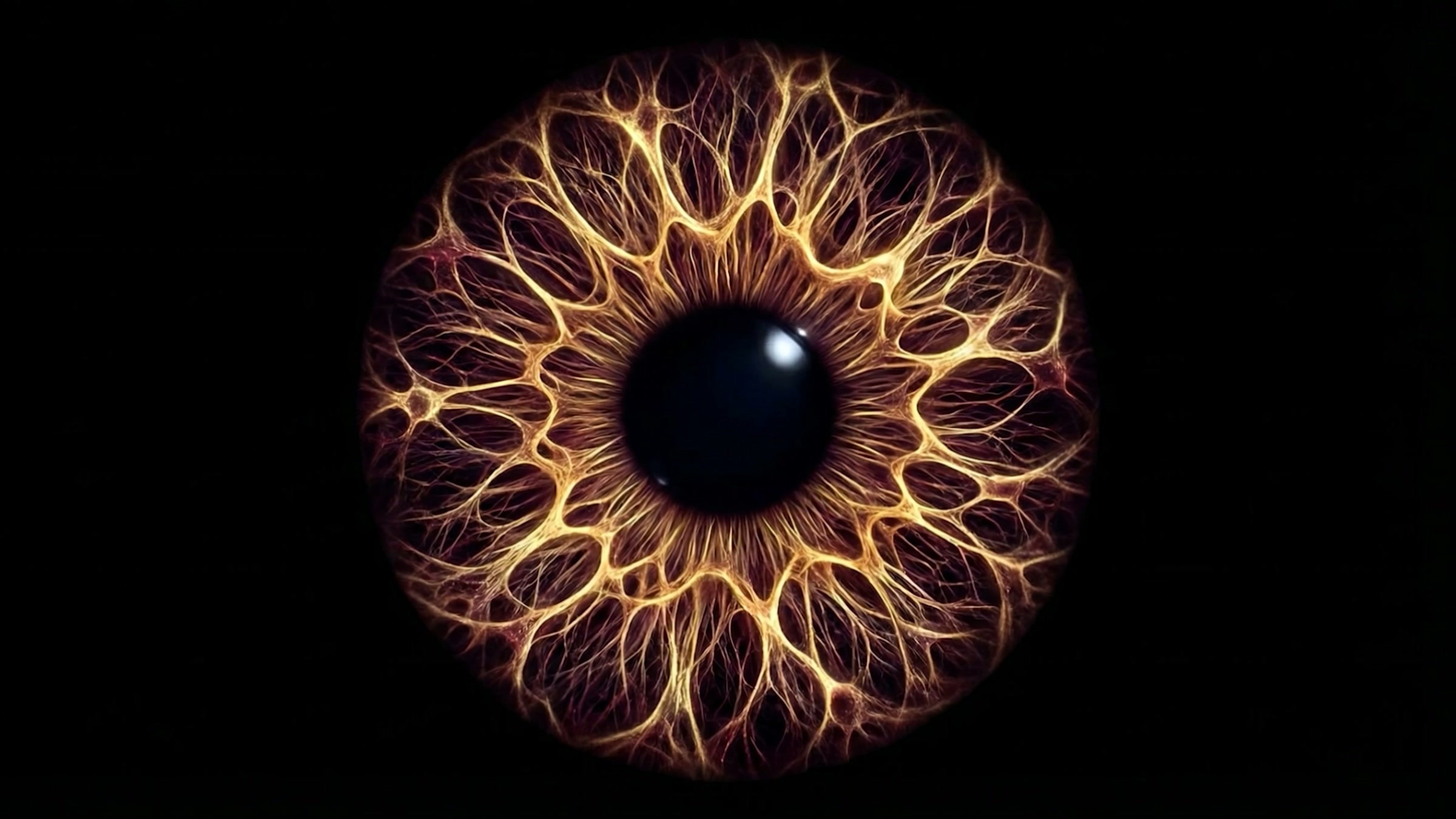
Attendees needed a mental reset, not a countdown clock, so the timer lives inside the pupil and breathes with it. The counter above is running now.
The same counter, photographed off the room mid break.
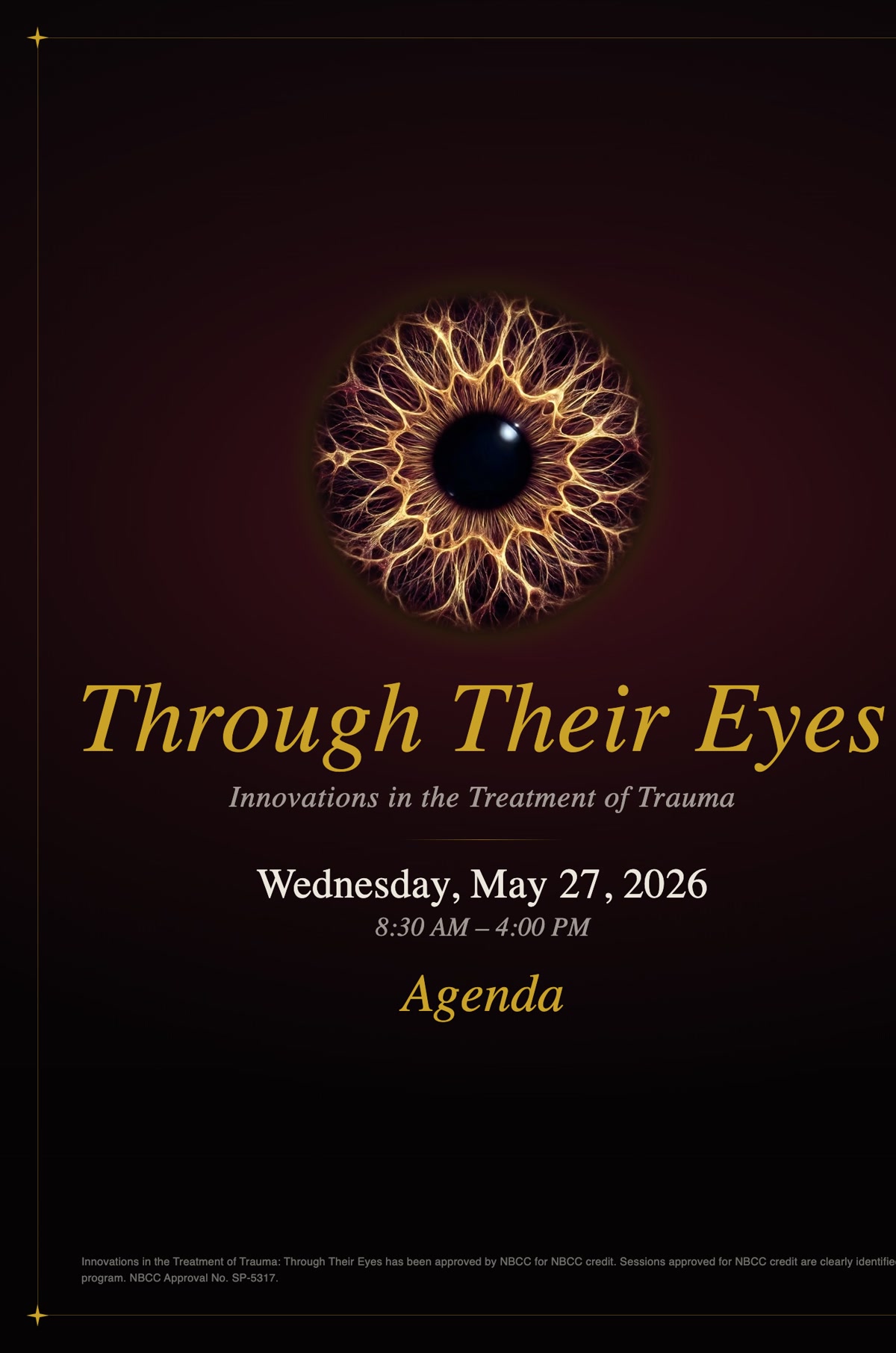
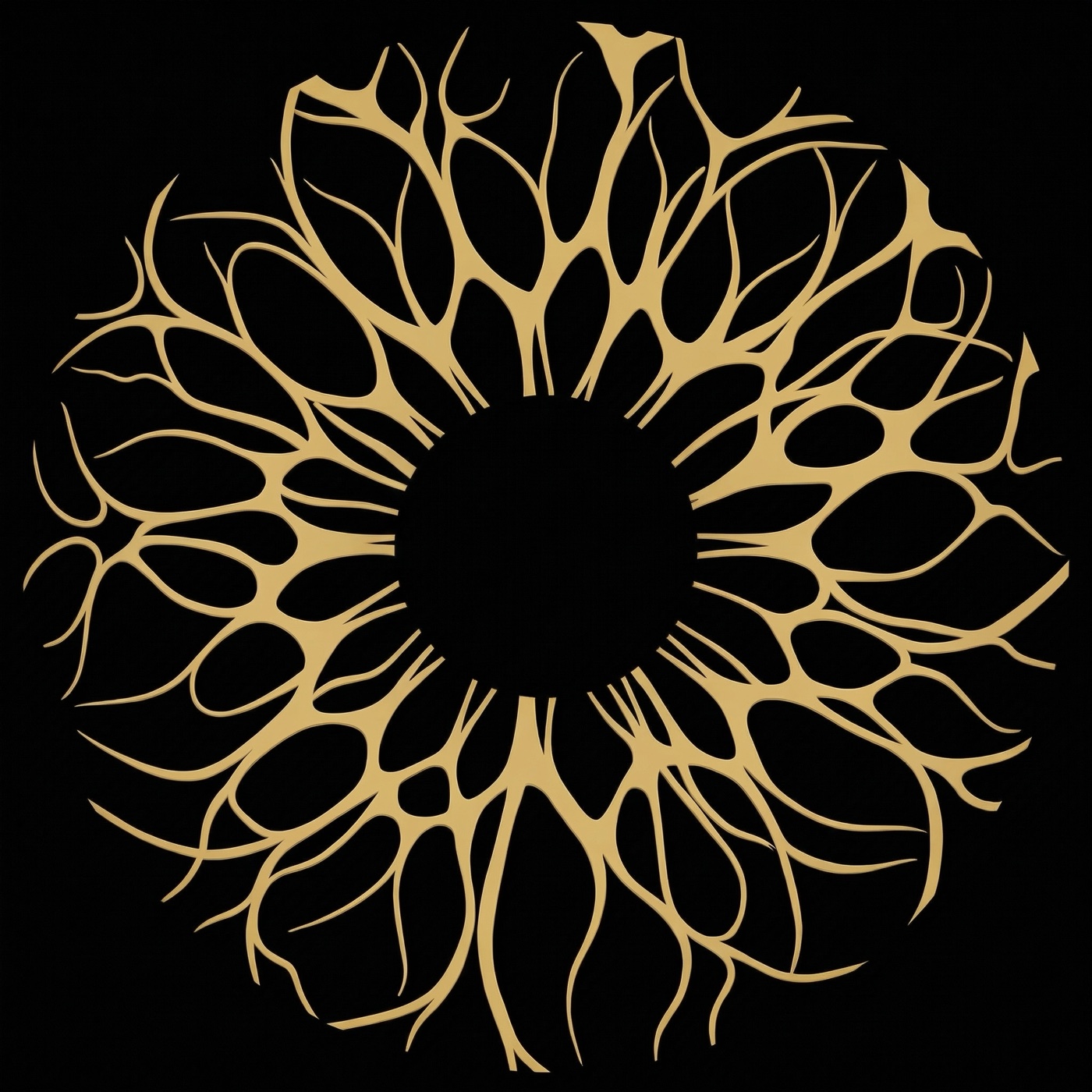
One image, two registers. Photoreal for the screens, linework for anything you can hold.
The kit shipped as a system, not a logo file: four colours, Cormorant Garamond over the hospital's own Avenir, and the rule for when one eye appears and when two. Burgundy and purple are the hospital's. The gold is in no guideline anywhere. It belongs to the room.
Finding the Face
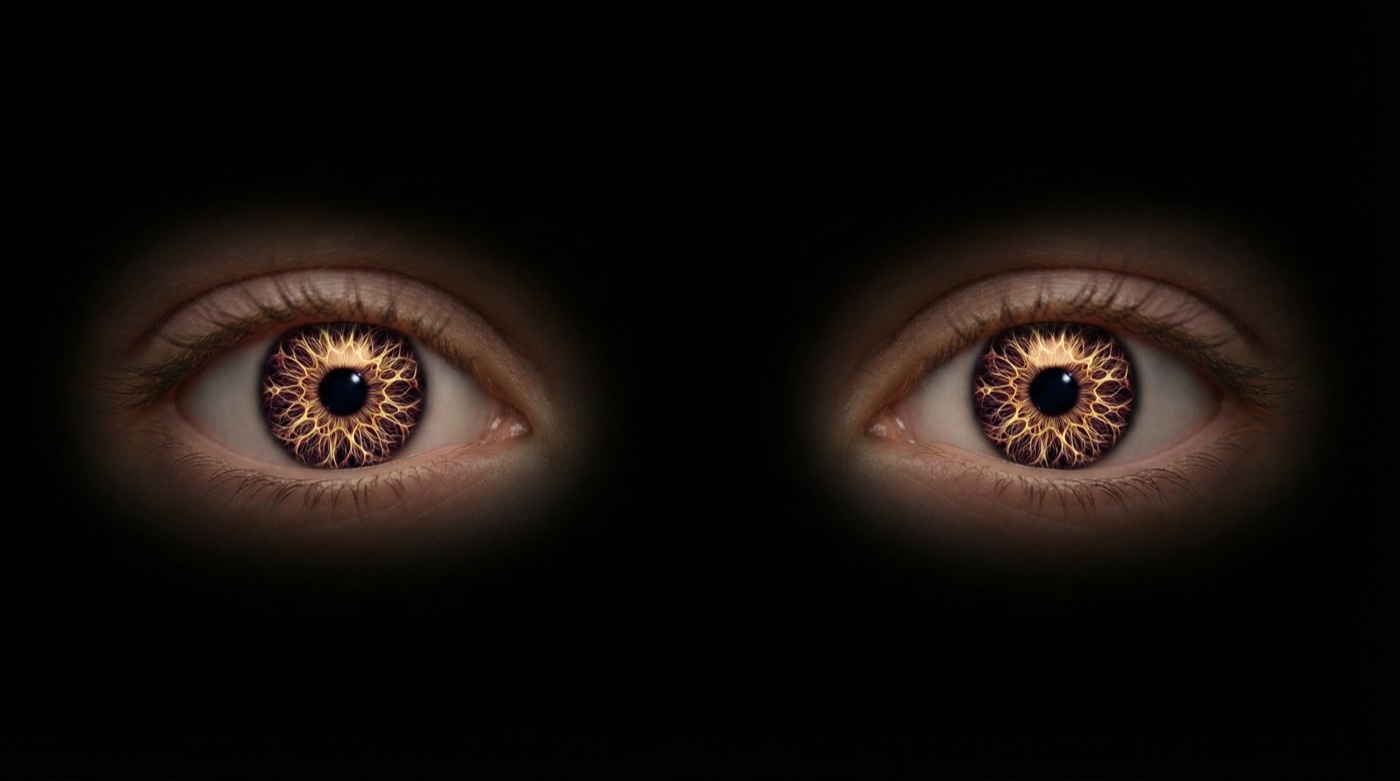
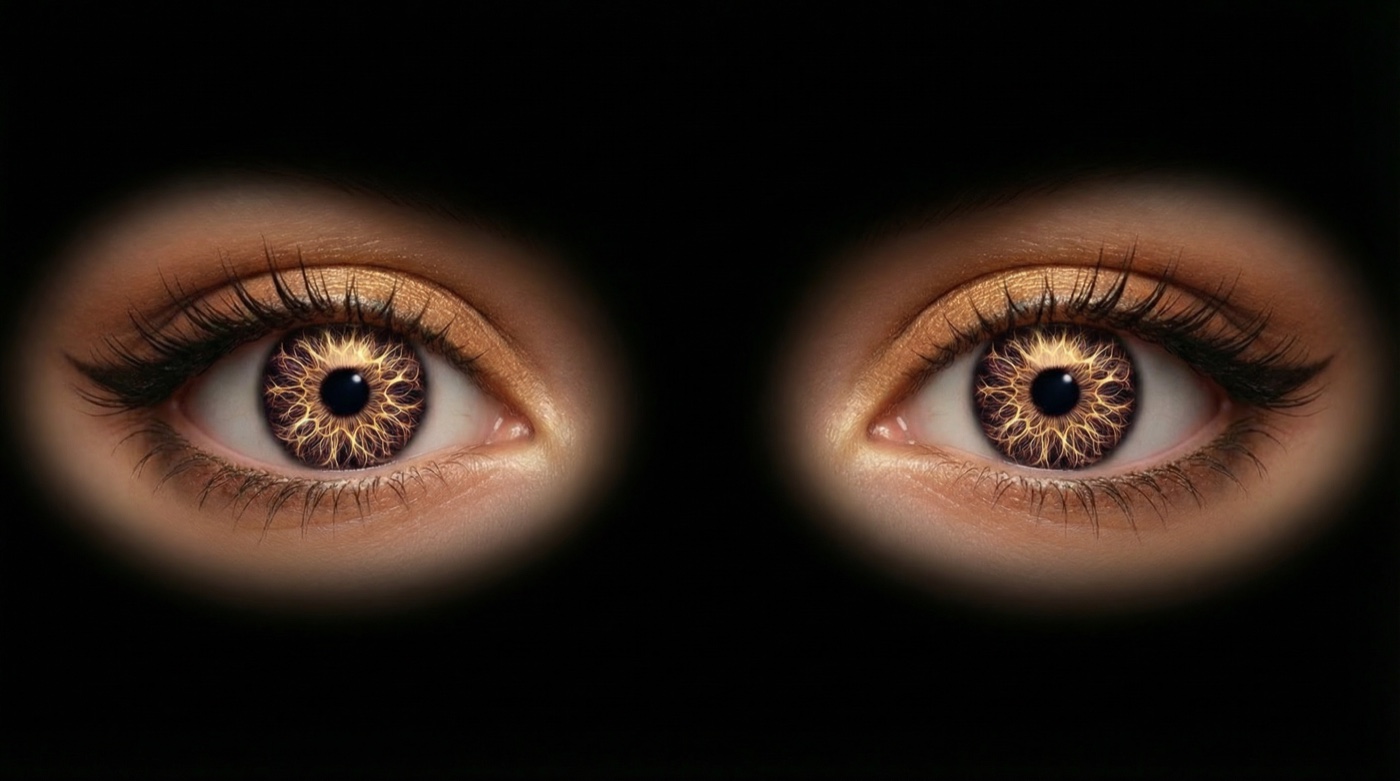
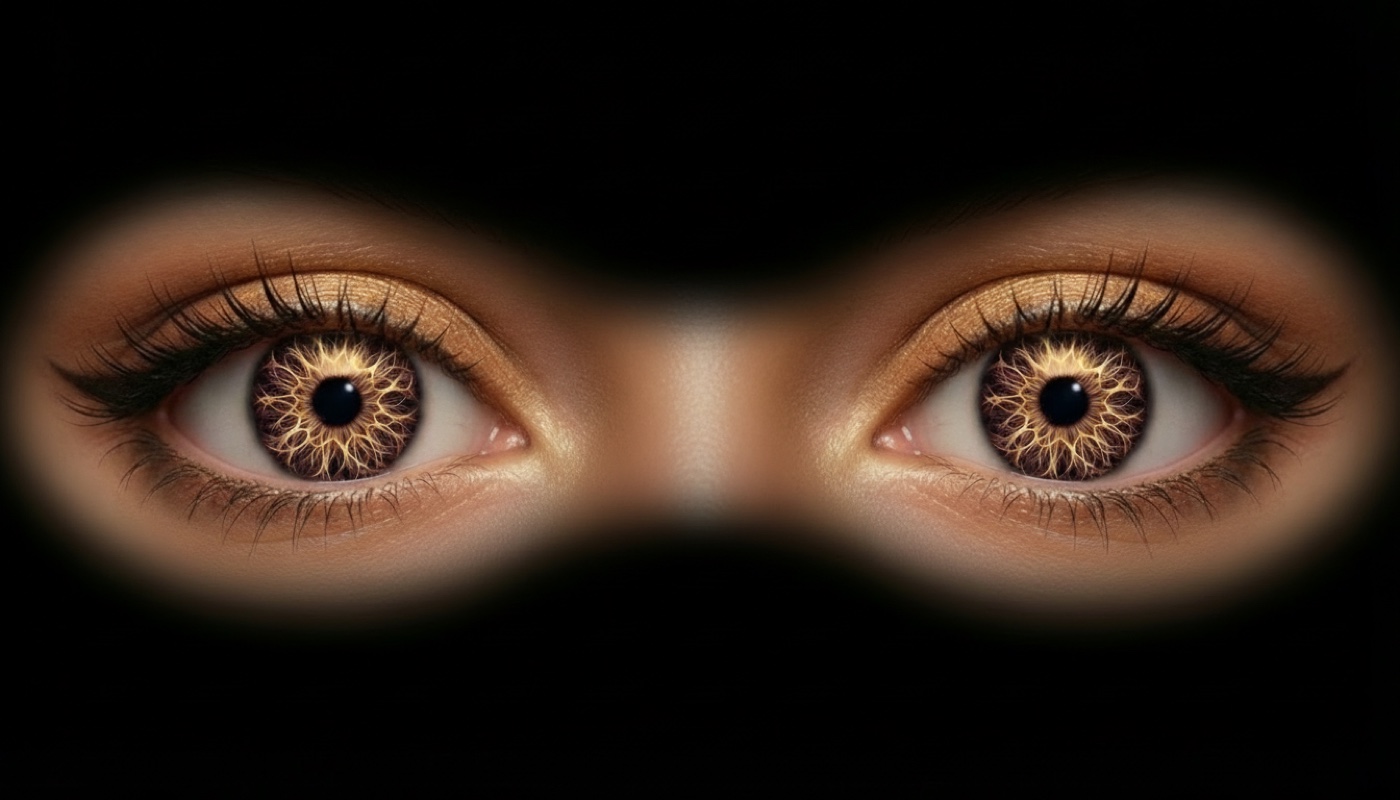
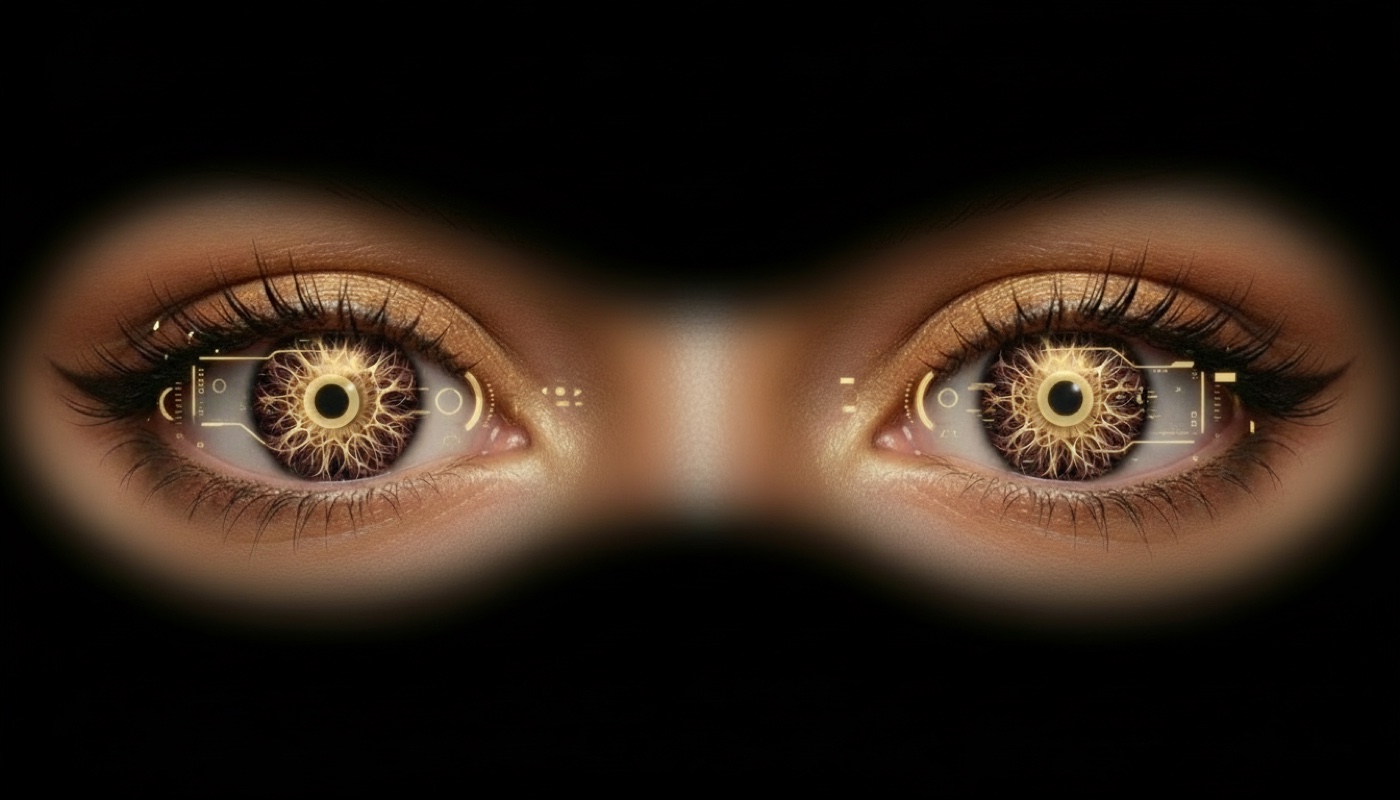
Two floating eyes are a graphic. Add the bridge of a nose and it becomes a person.
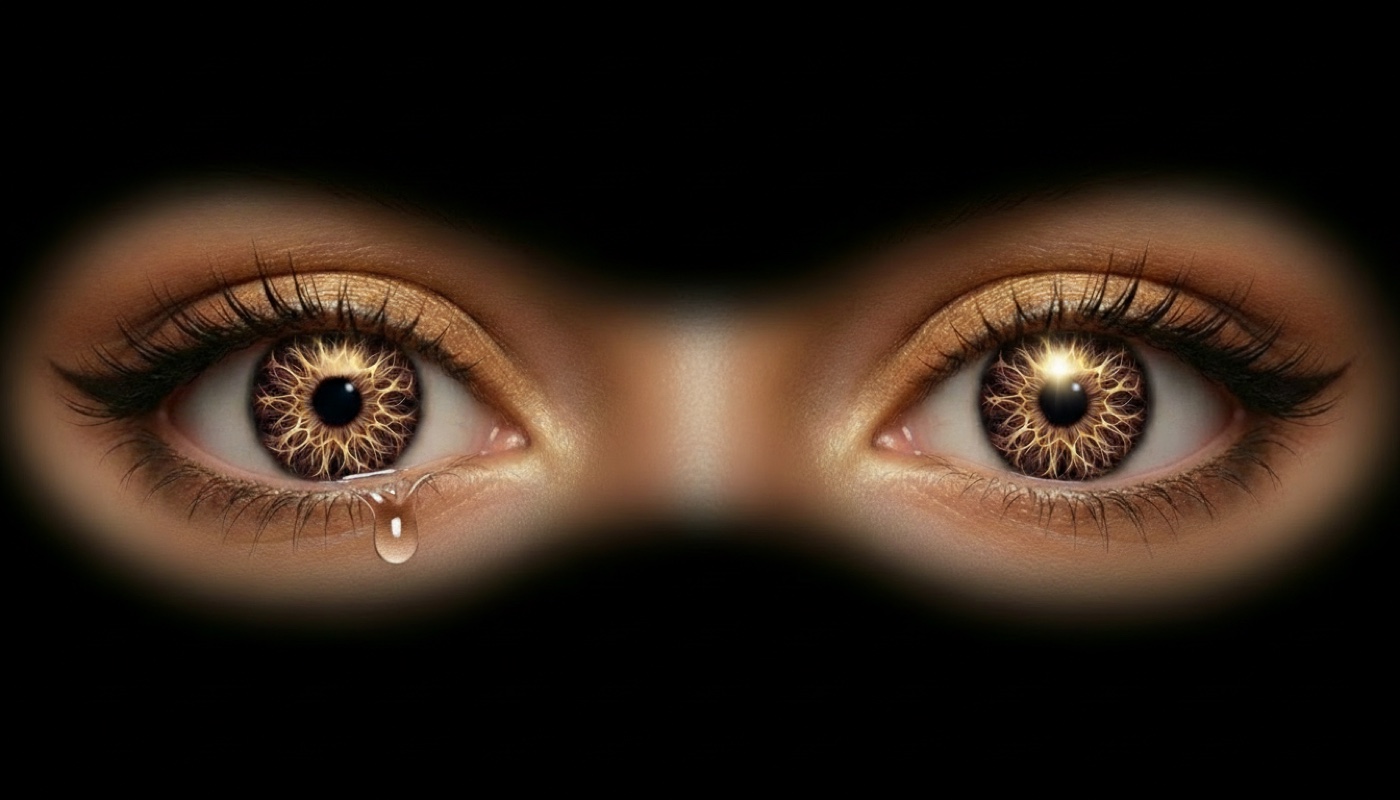
1 / 7
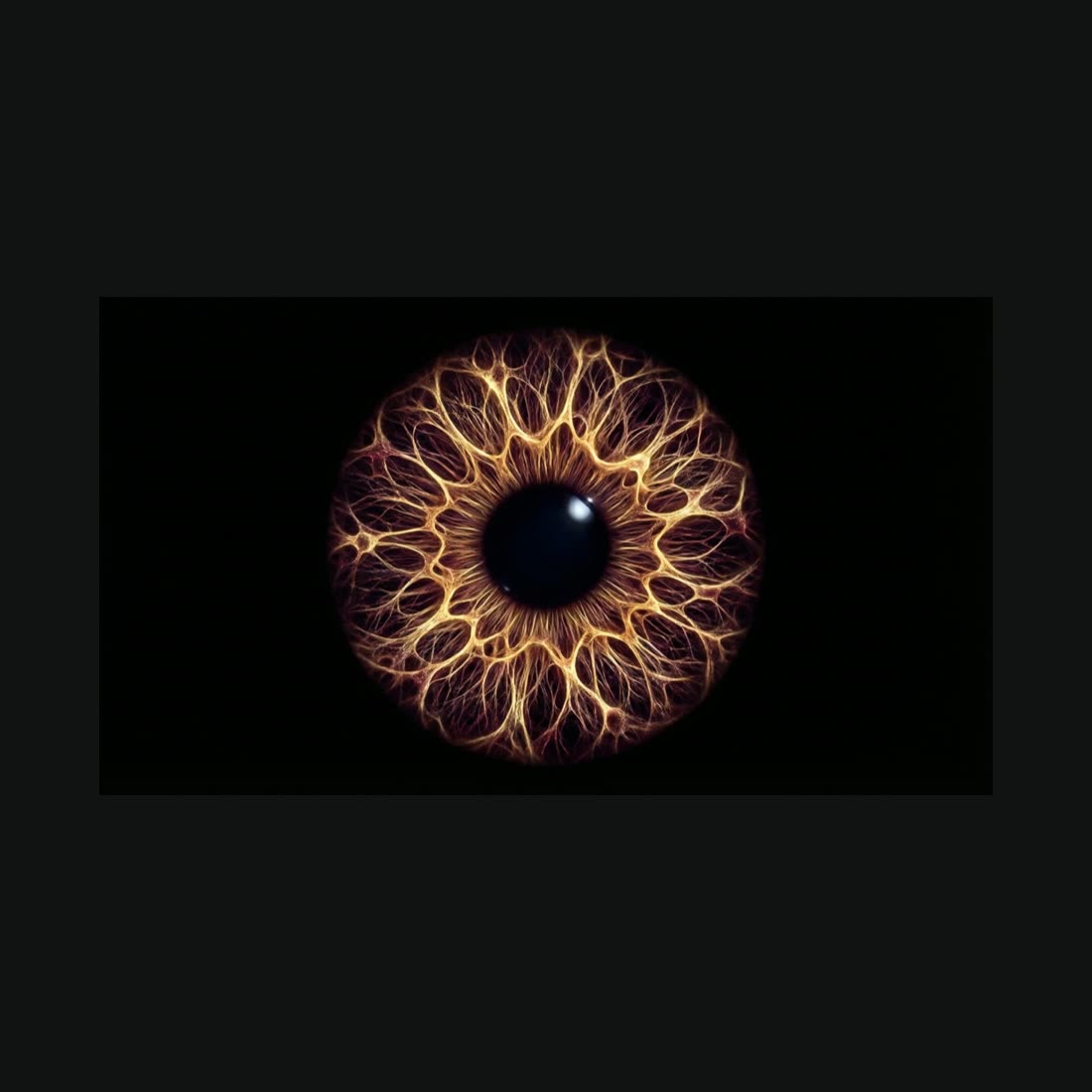
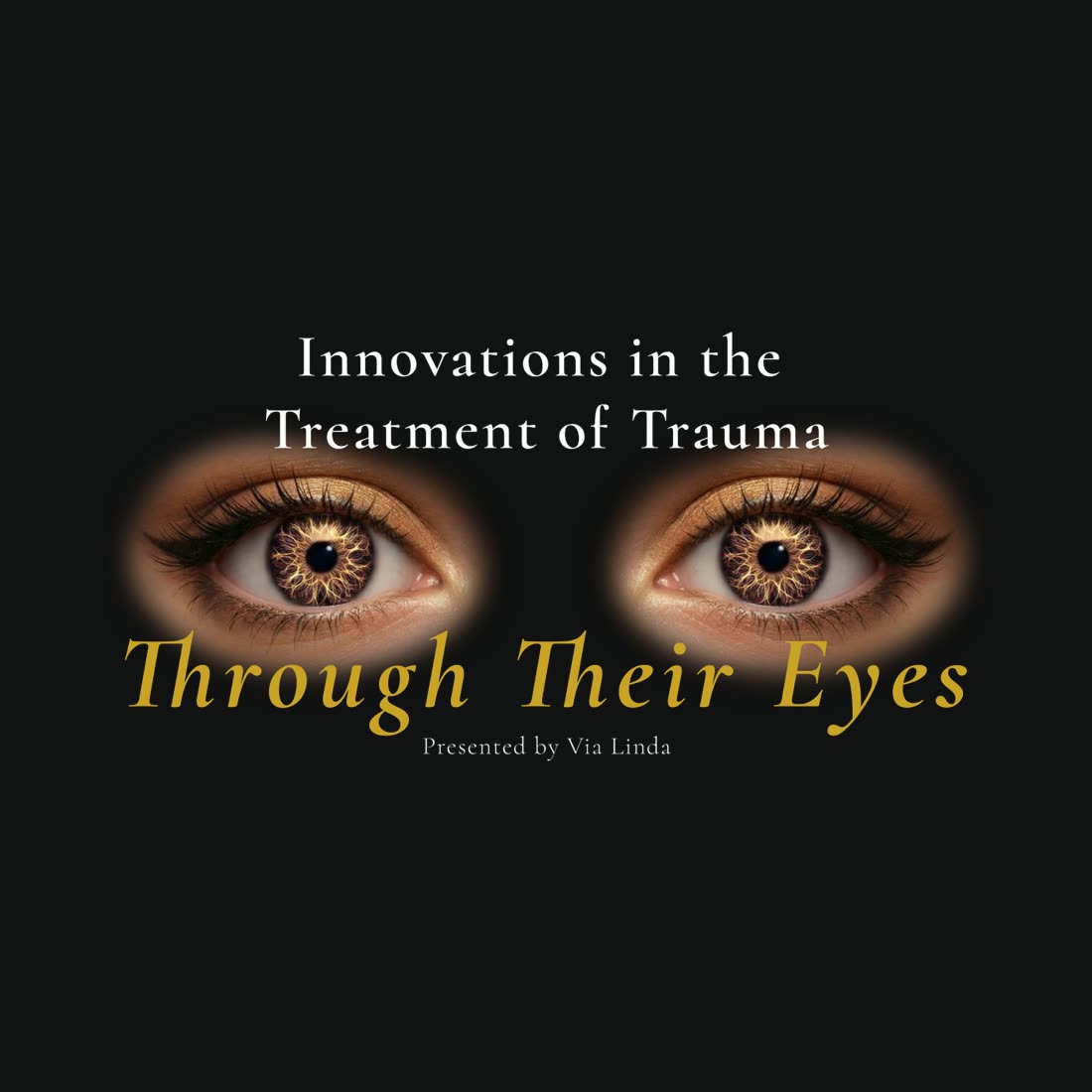
Where the search landed: two marks, one language. The iris for turning inward, the two eyes for connection.
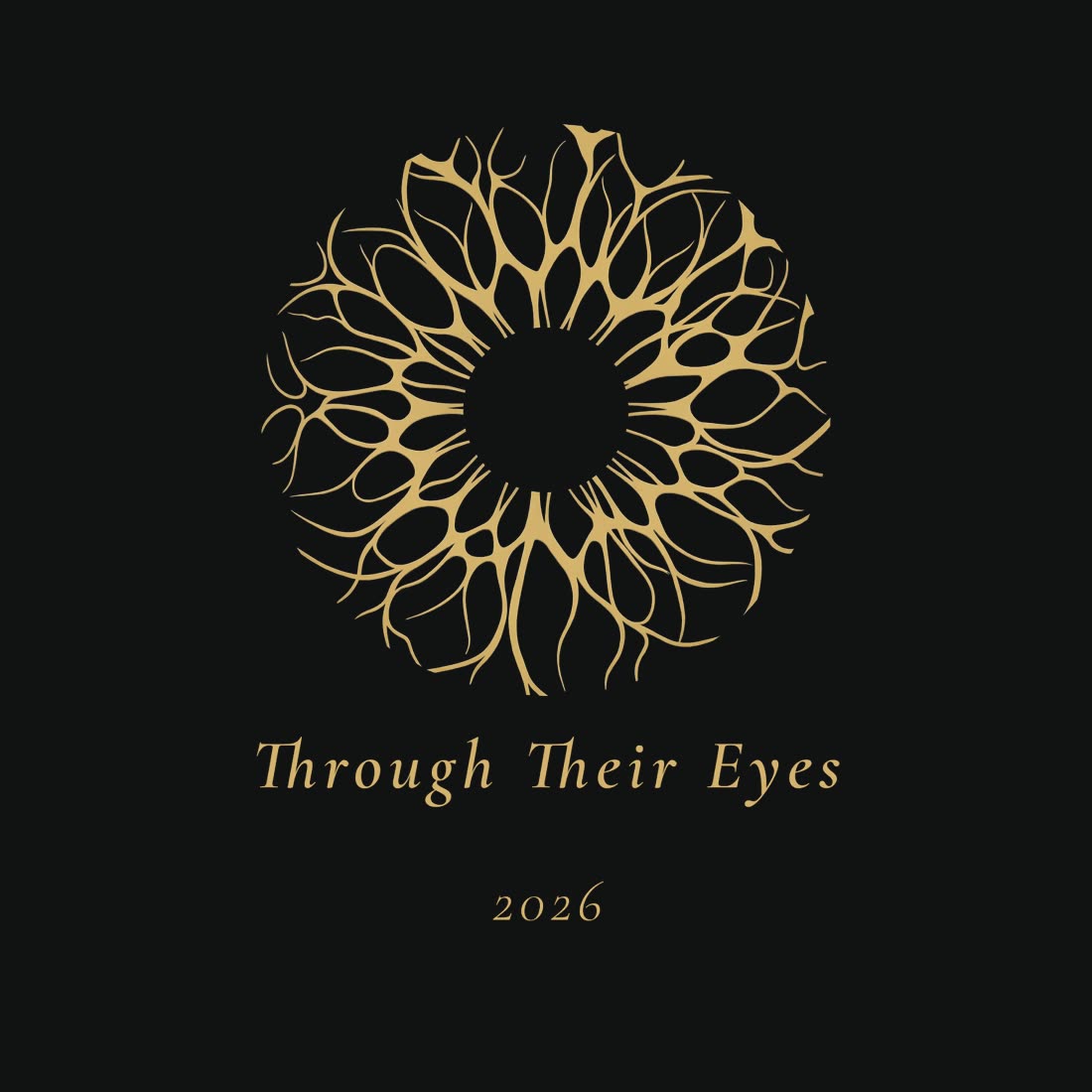
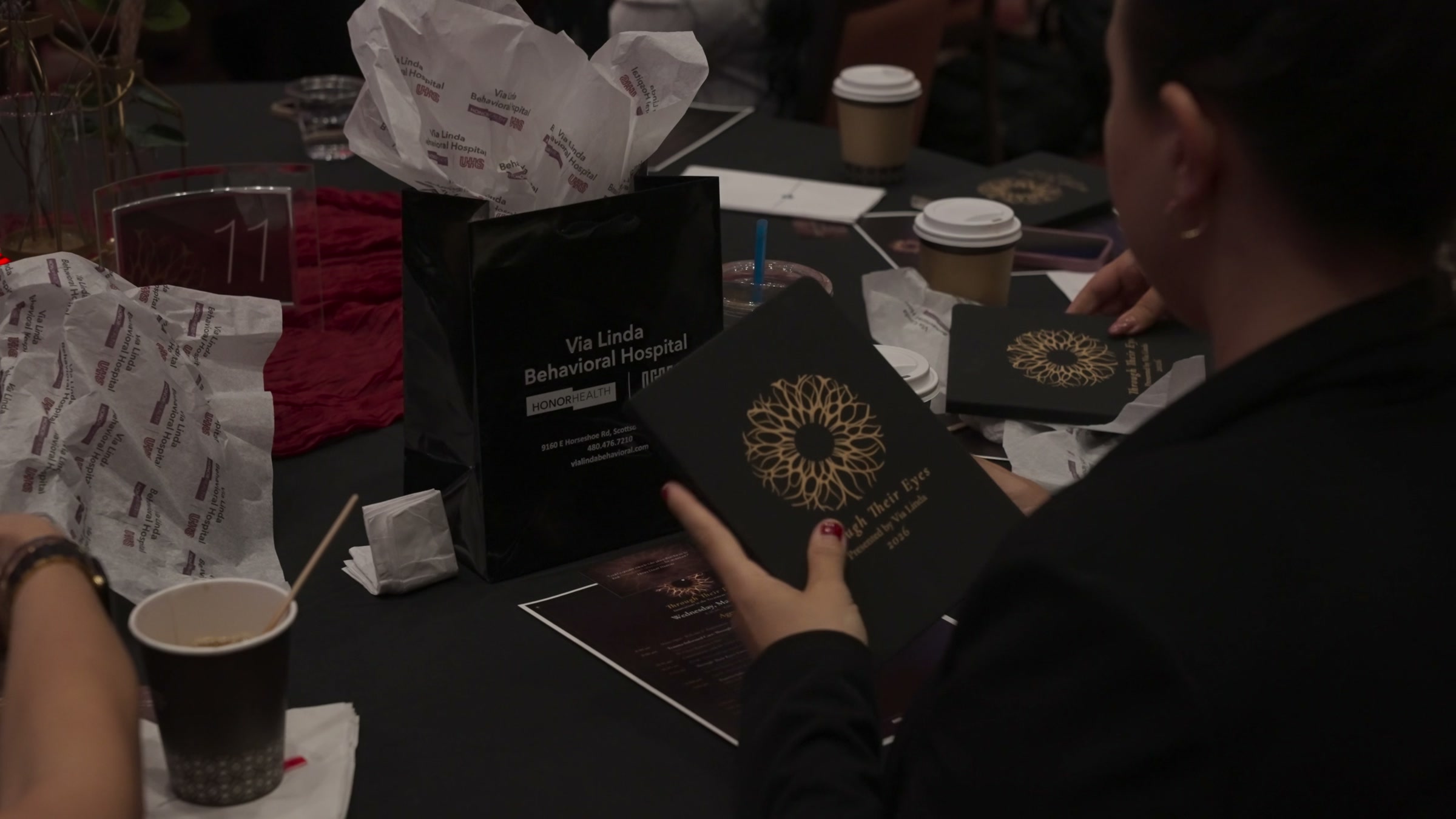
And where it ended up: reduced to one gold line for the emboss, on the journal every attendee carried home.
Tell Them
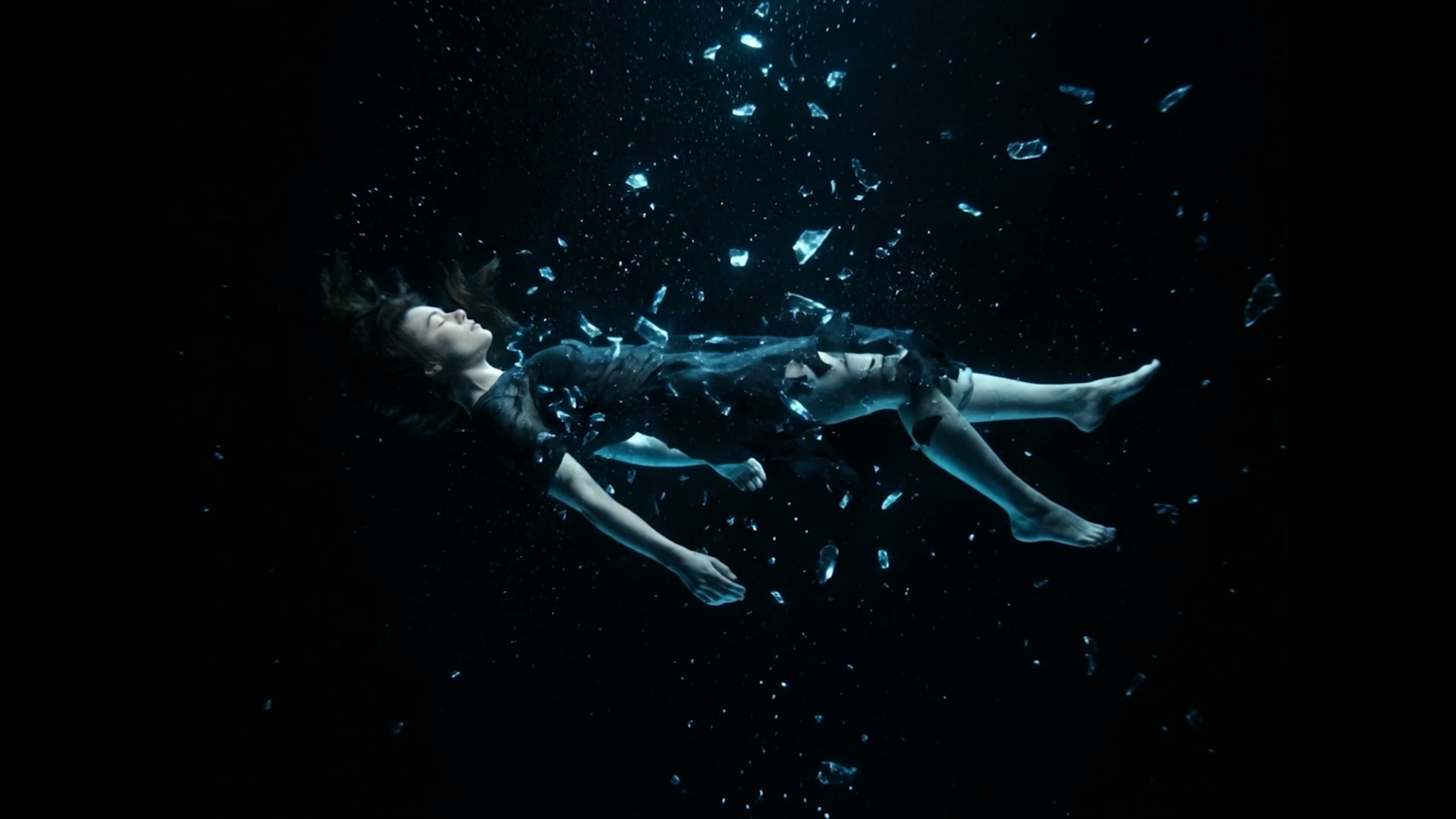
The film opens on a closed eye and spends ninety seconds in dissociation: smeared crowds, a woman alone on a bed, two people separated by a fogged door. It drains to black and white as it goes deeper. Four words surface, one at a time. Survive. Silence. Alone. Invisible.
The score is a song the hospital had made, cut to picture. Its refrain is the argument: tell them what happened inside you.
Colour returns as gold. A desert sunset appears inside an iris. The last shot in the film is the mark itself, burning inside a real person's eye.
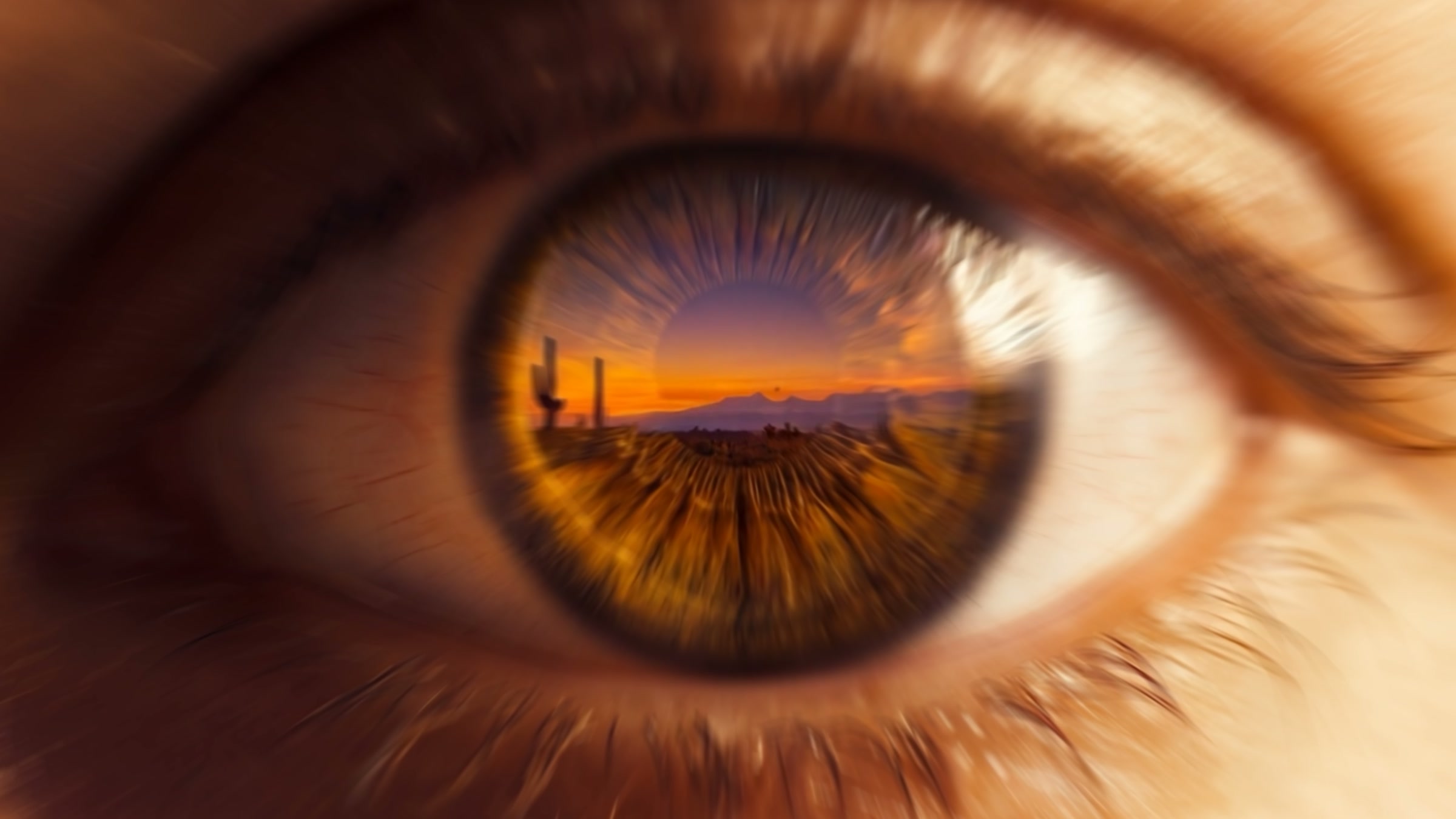
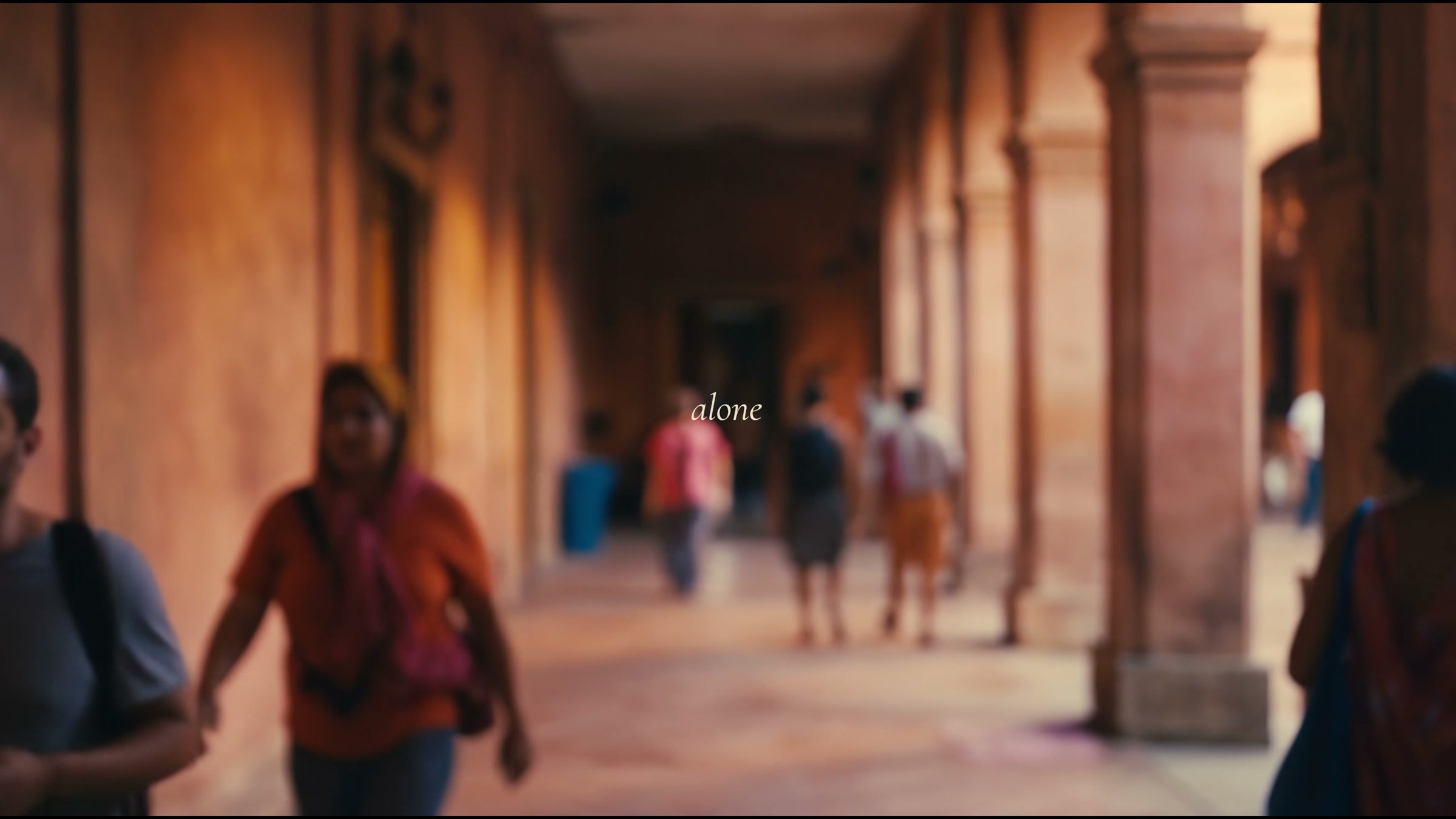
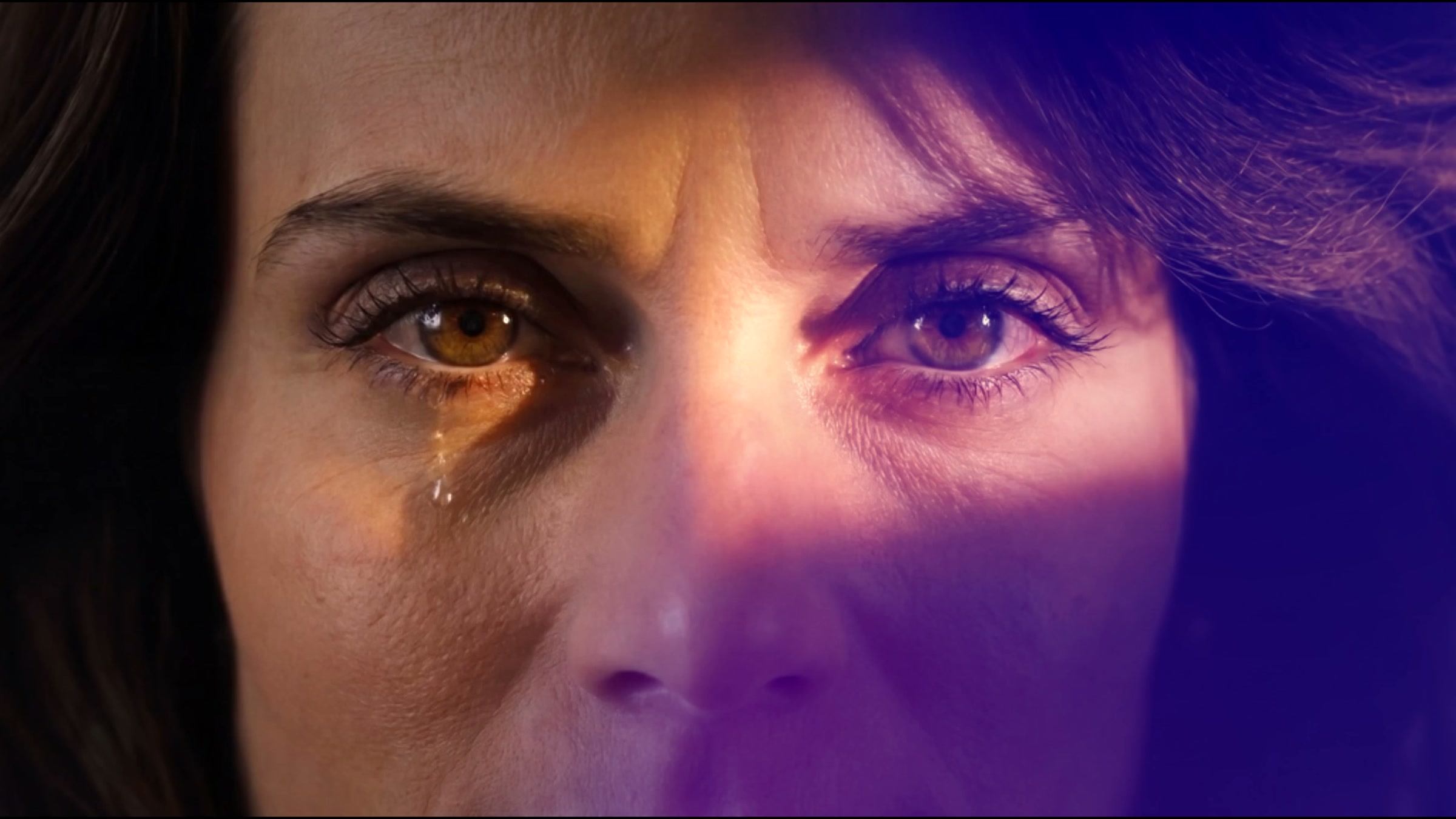

Every cut in the film, reduced to its dominant colour, in order. The long grey passage is the dissociation. The violet spikes are the turn. The gold is the way out.
I appreciated the videos. The music and imagery were moving and impactful.

All forty three cuts, in order. Scroll sideways.
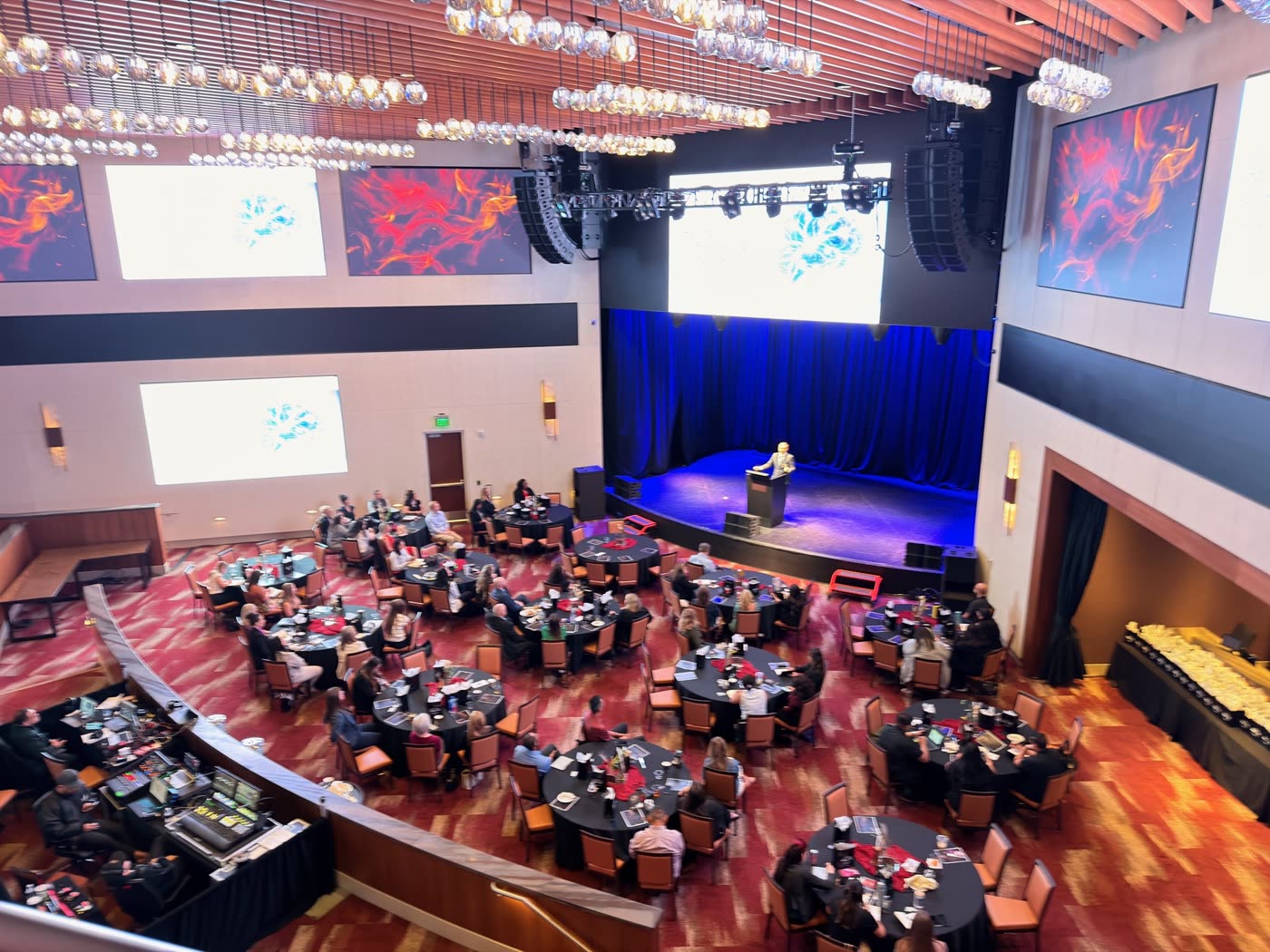
The film where it was built to live, over a room of two hundred, screened once.
Every Entrance a Film
Every session opened with a film. Not a lower third and a walk-on track: a piece in the day's own language, built from each speaker's subject. The trauma nurse's intro grew a golden neuron out of coral. The medical director's ran on synapses and a slow infinity loop, because his session was on neurofeedback.
For the VR company on the bill, we sent their brand through the same arc the room already knew. A cold digital fall. A headset. A field of gold.
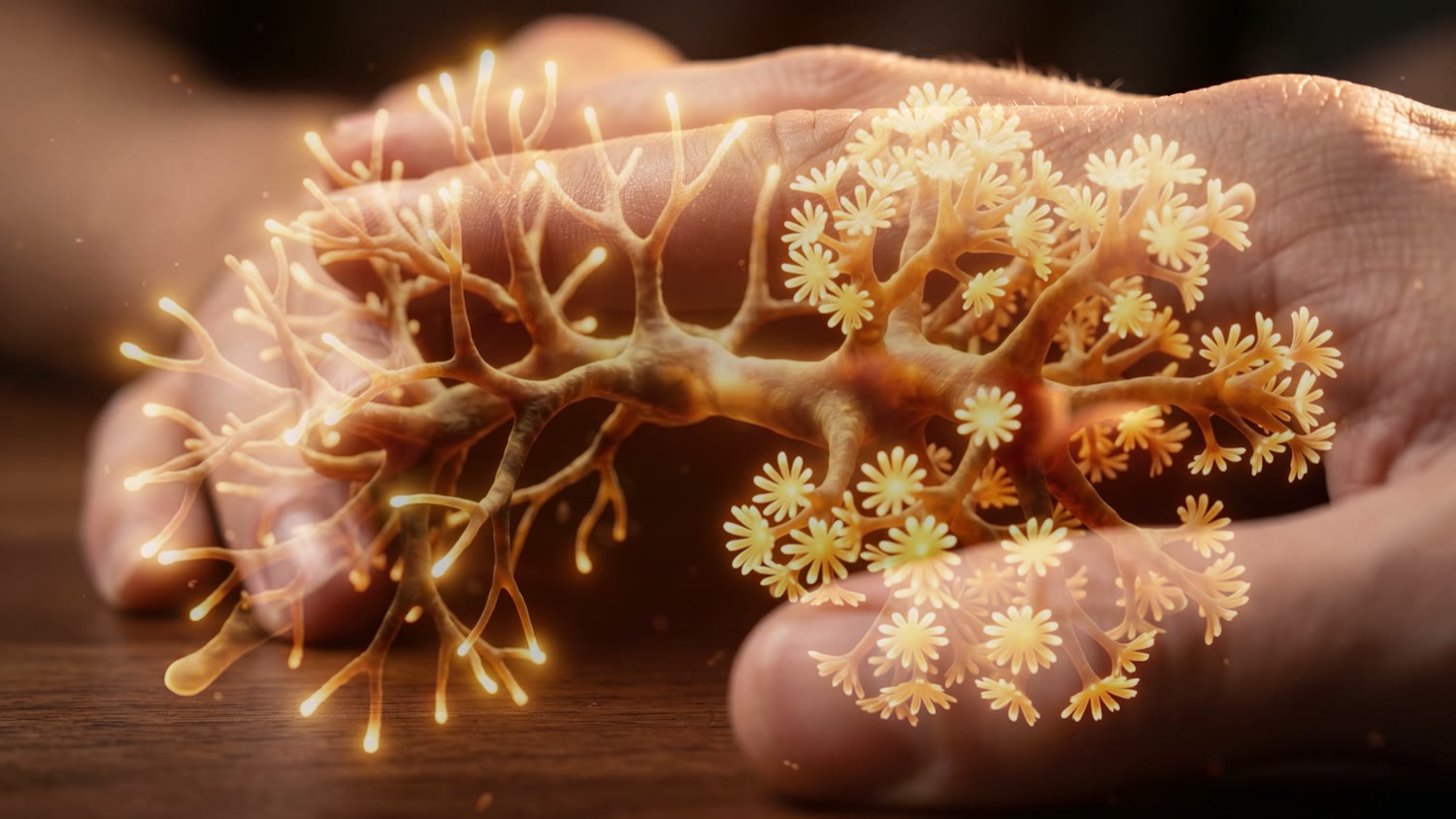
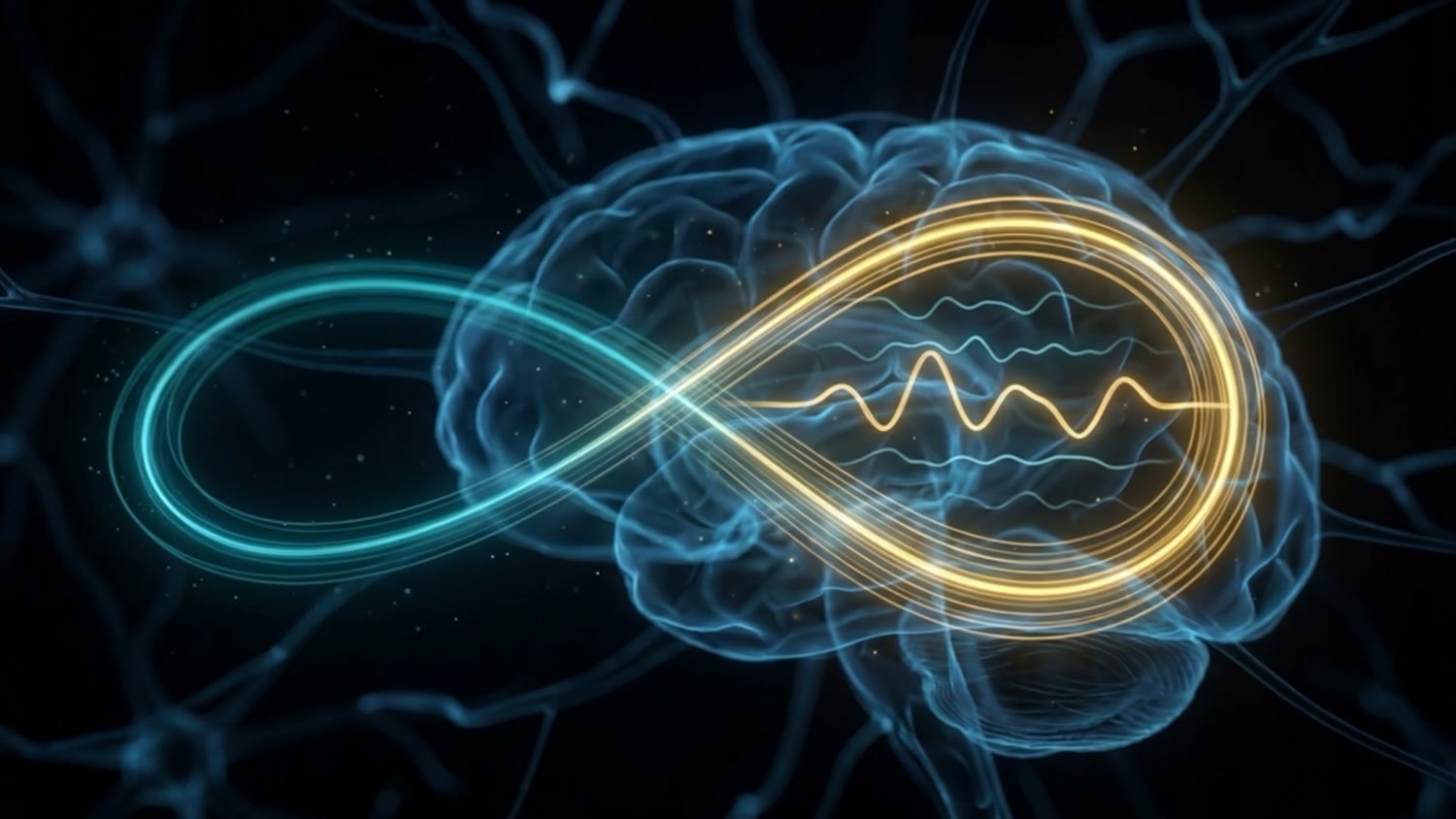
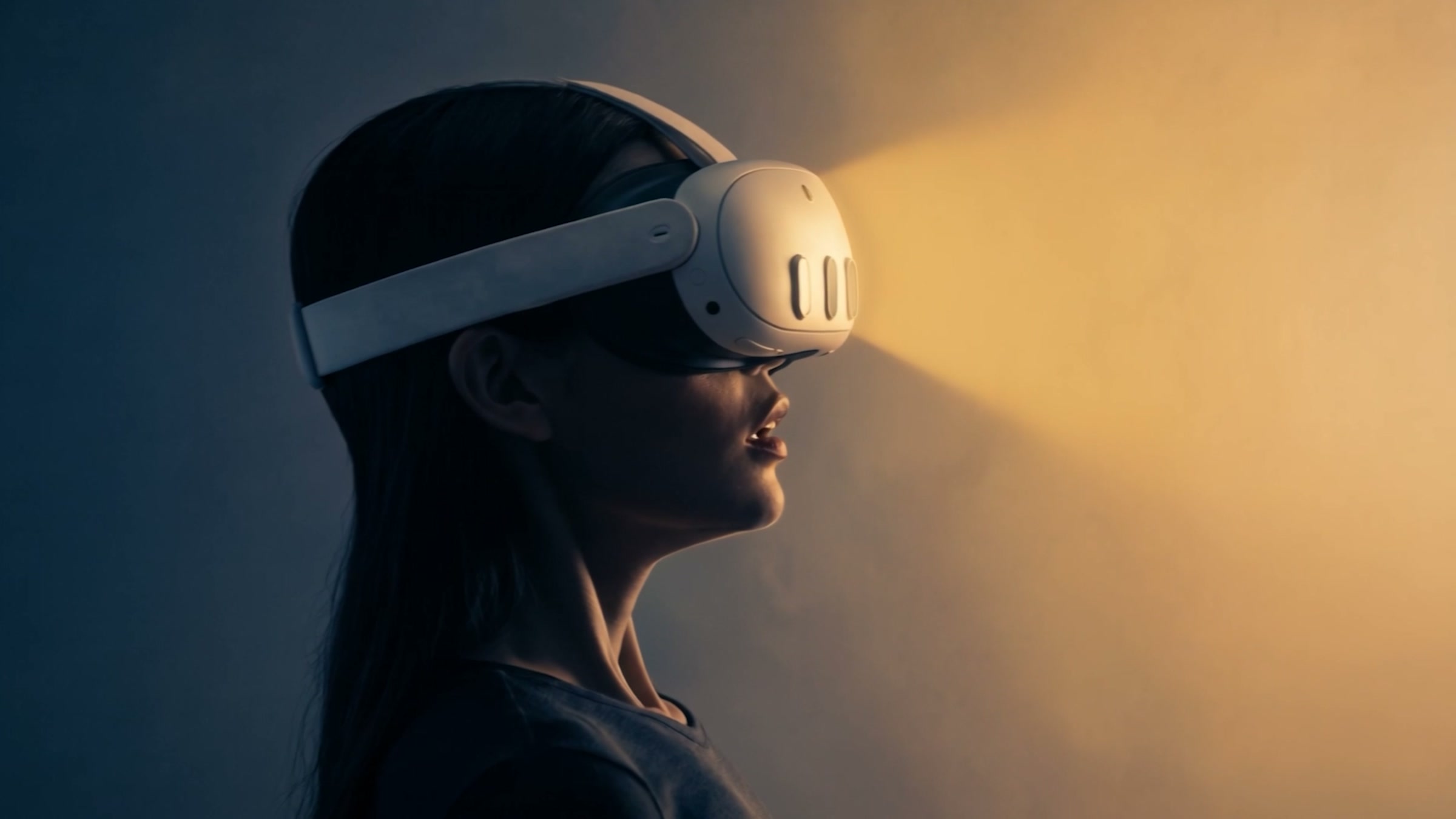
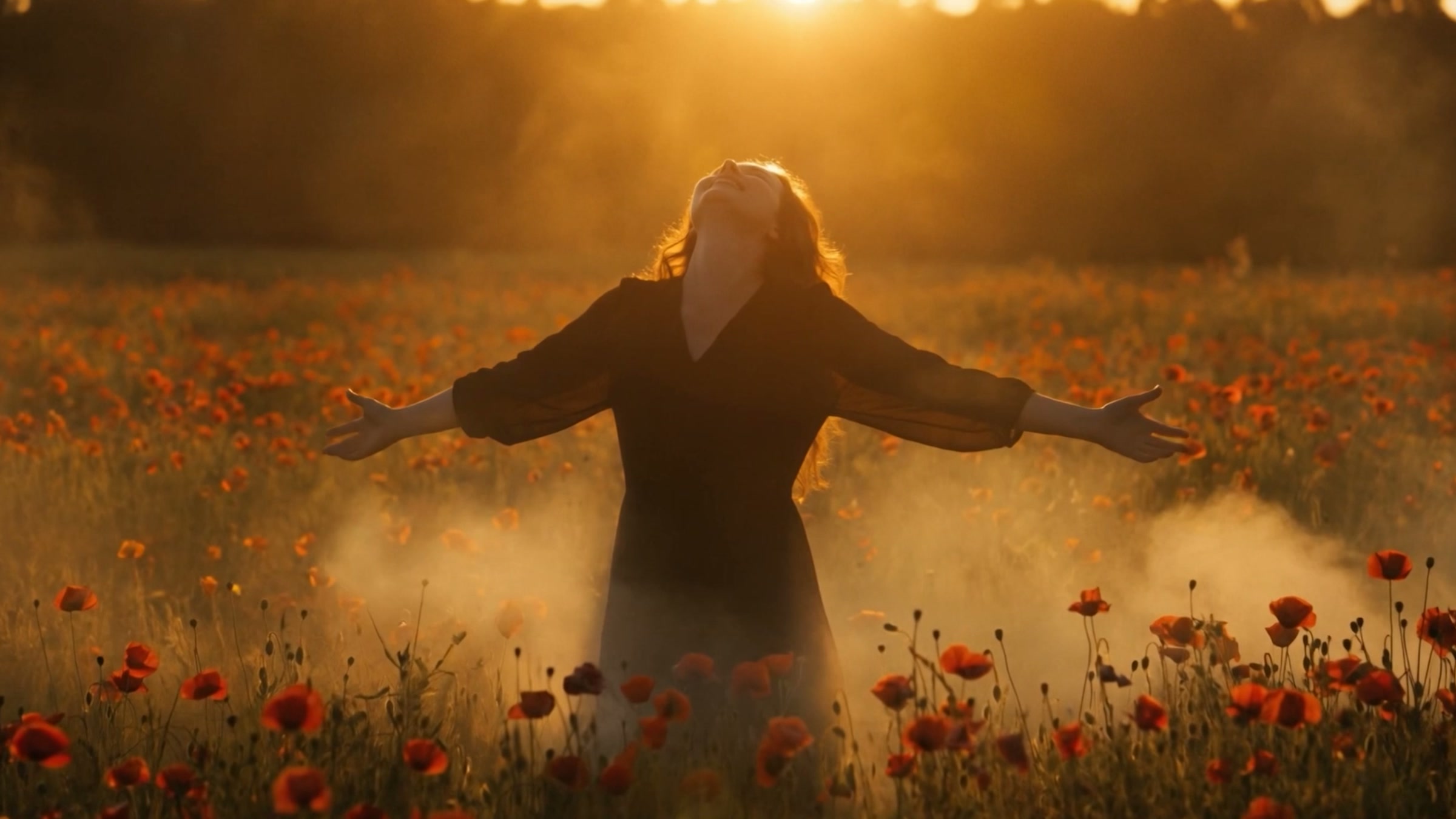
The PsyTechVR walk-on, cold to gold in ninety seconds.
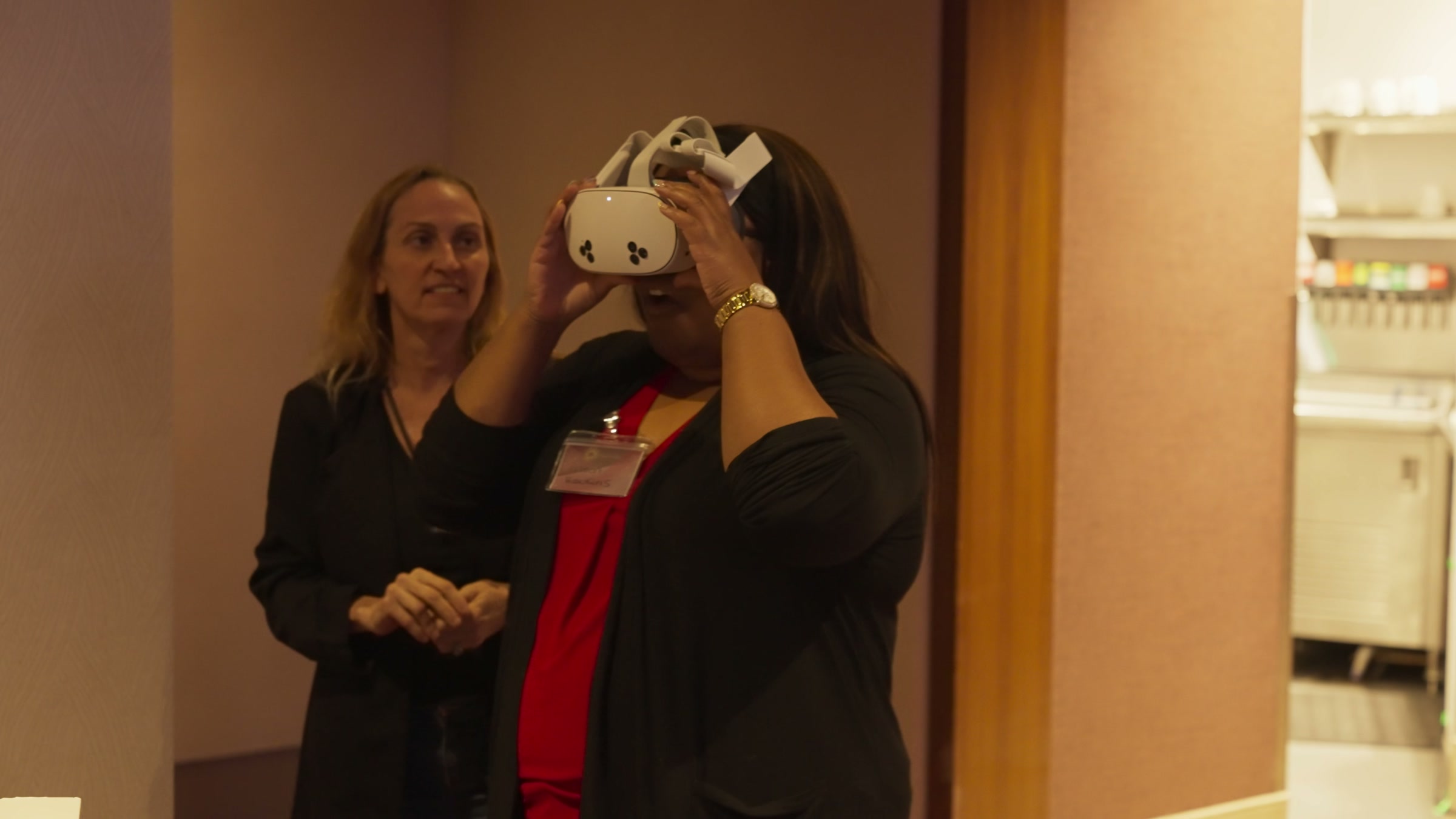
What a walk-on film does for a brand: the demo booth ran headsets through lunch, and the room came to it asking about the company.
Four Inputs
The room takes four video inputs. One drives the hero screen behind the stage. One drives the outer screens, the twin video strips wrapping onto the side walls, and the curved LED ribbon, so the room could run warm during personal stories and cold during clinical ones. One is held in reserve.
The fourth is the interesting one. The centre screen on each side of the room is physically wired to mirror its opposite: one signal, both walls. Rather than work around it, we used it. Each principle of trauma-informed care appeared as it was spoken and then stayed, so by the end of the keynote all six were flanking the room on both sides at once, on a single input.
The canvas, mid show. Eighteen screens across the back wall alone, six more flanking the stage, twin video strips wrapping onto the side walls, and a curved LED ribbon over the bar.
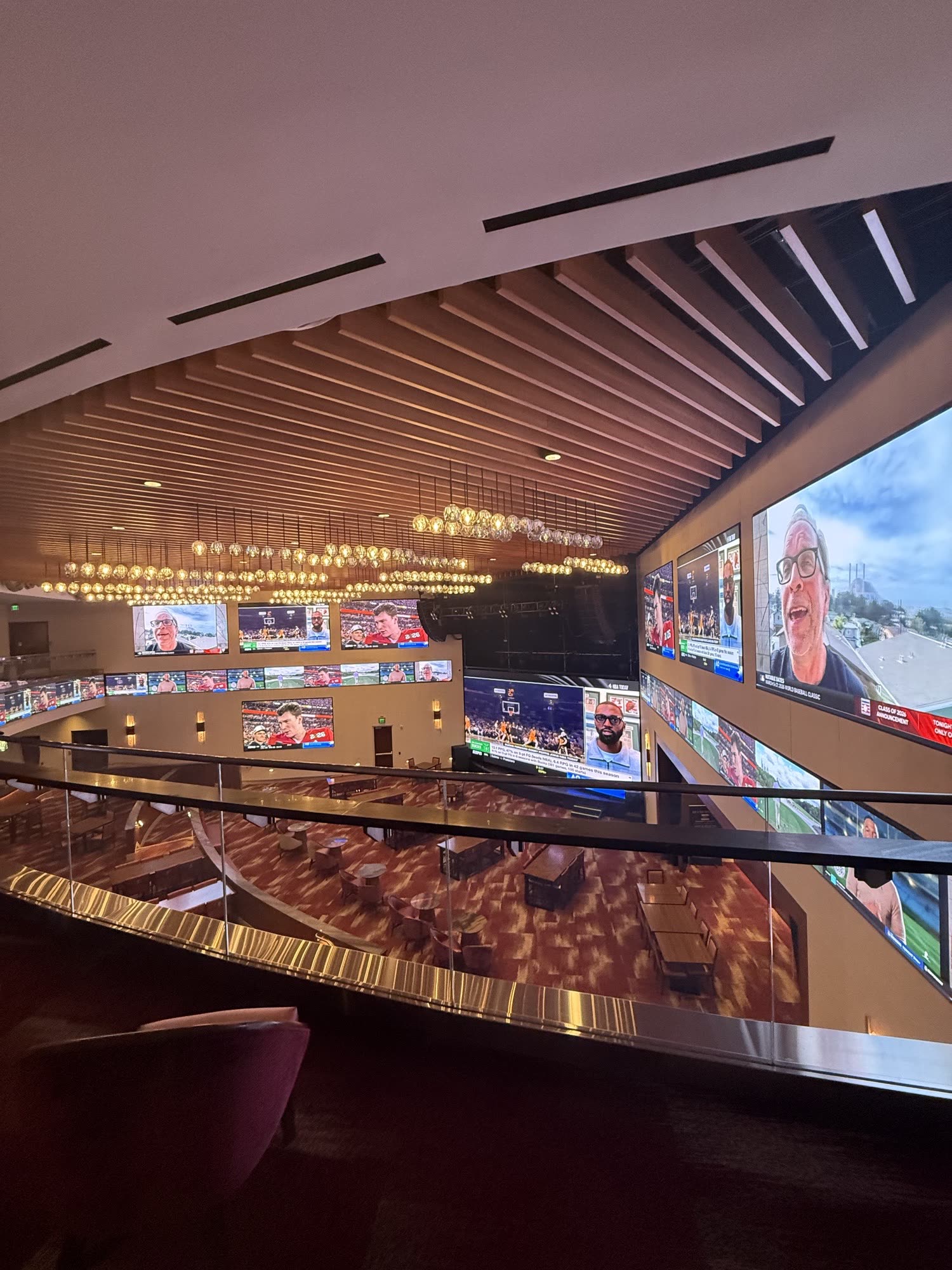
As found on the scout, running the venue's own feed. And as run.
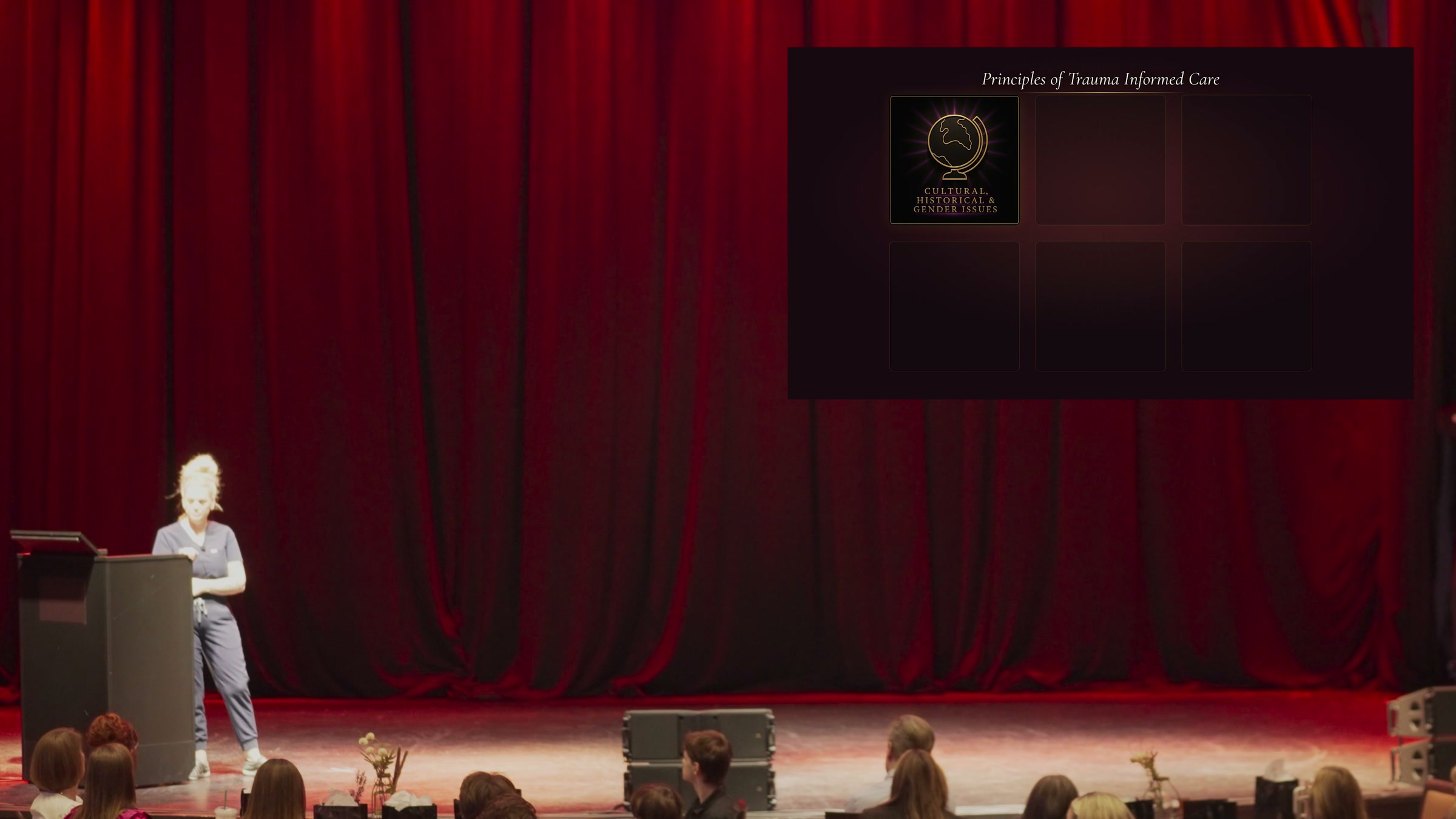
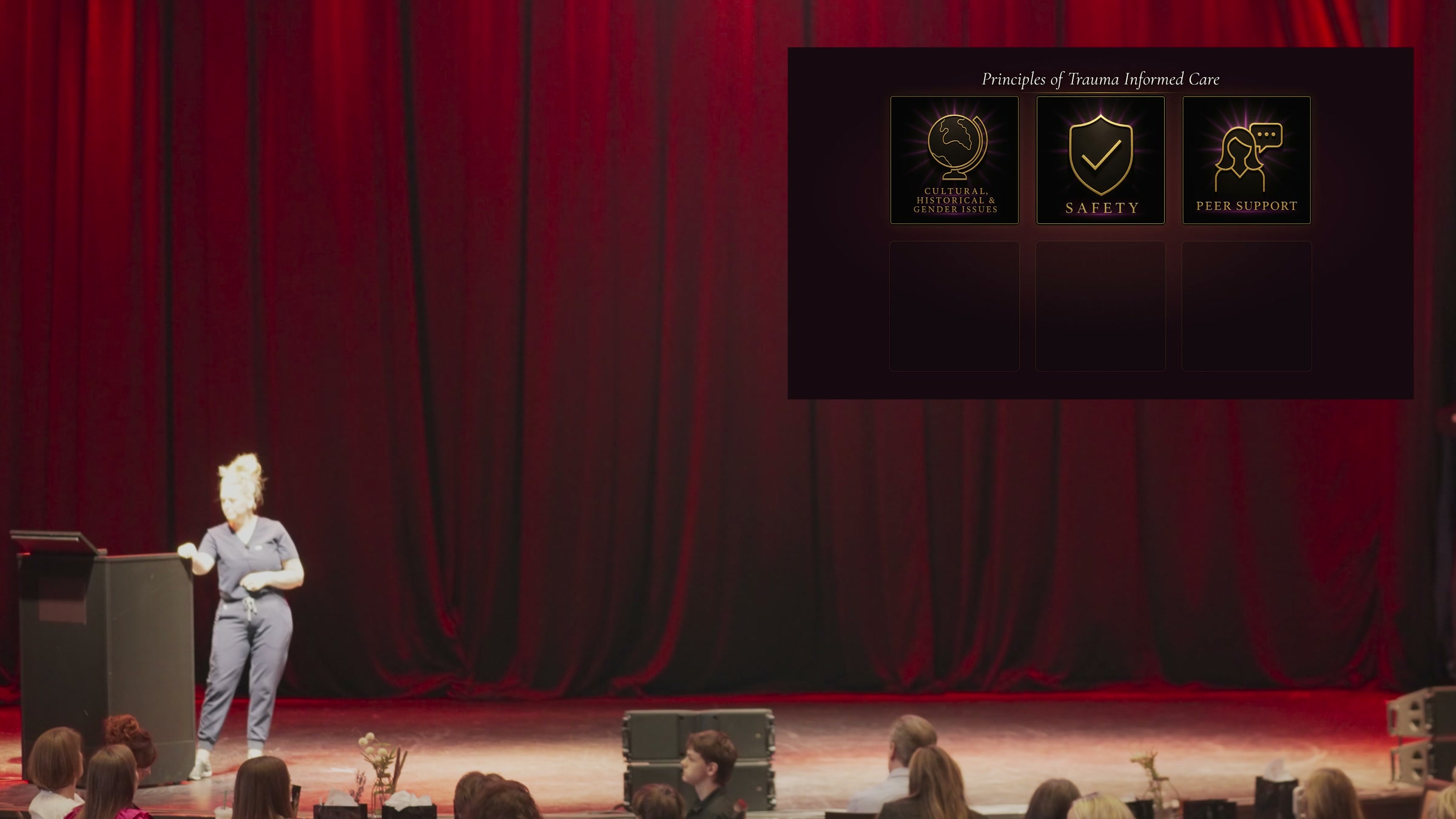
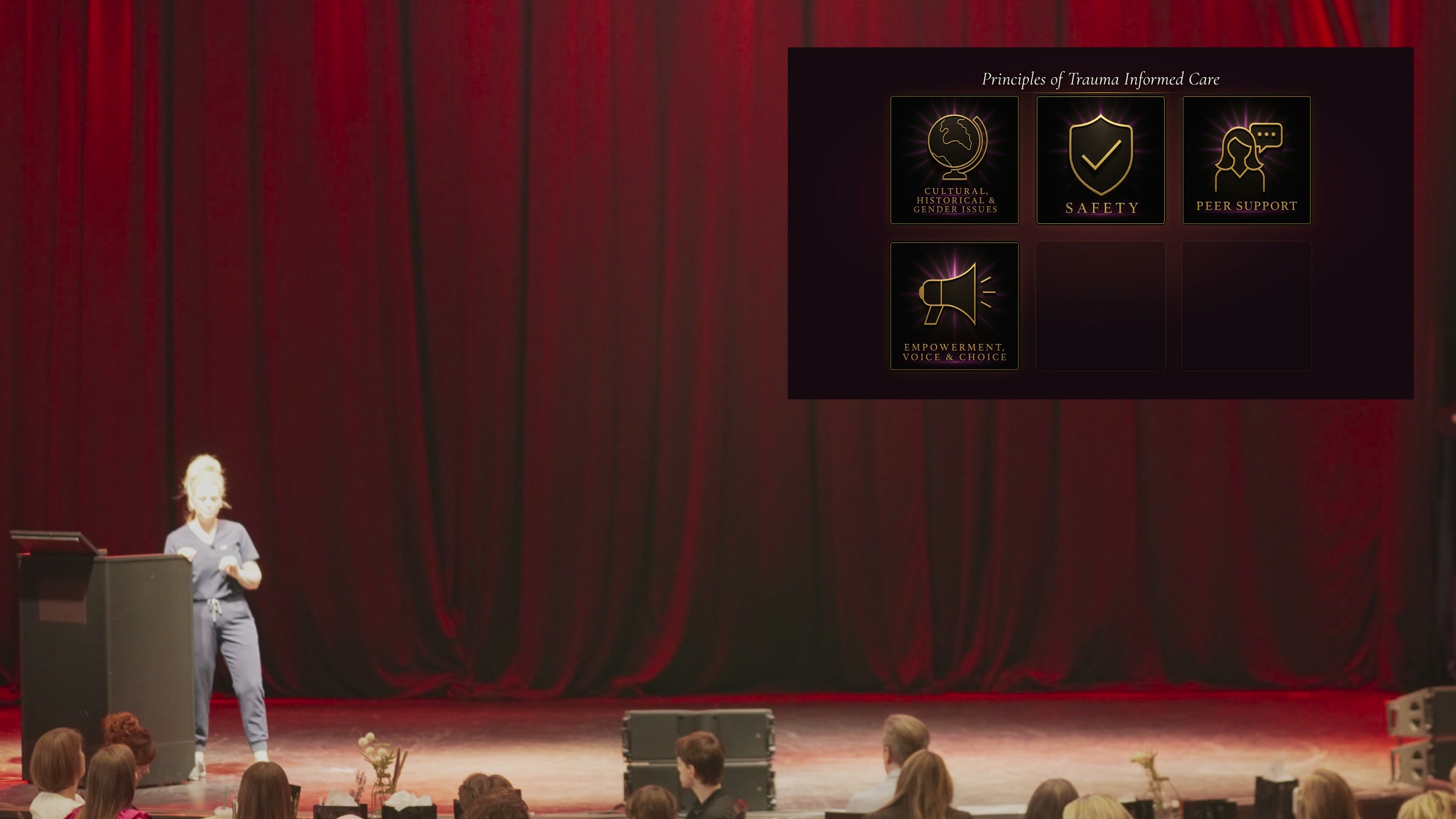
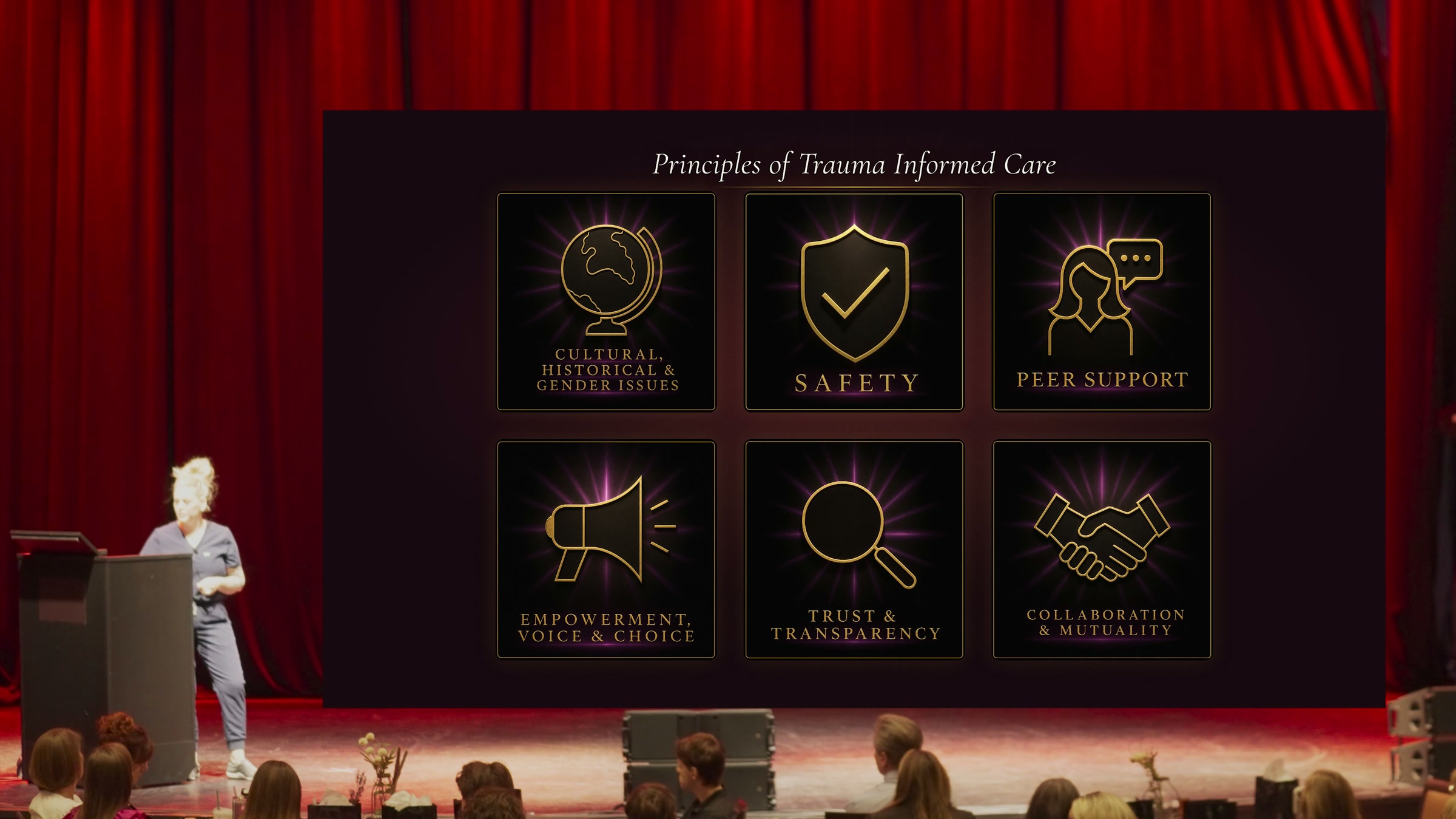
The accumulation, photographed off the room. One principle, then three, then four, then all six.
She Doesn't Follow the Show
We were brought in to build the keynote's show file. We ended up programming and cueing the entire day from QLab, most of the master cue list built overnight after the dress rehearsal.
Every cue carried its own trigger line in the notes field. Fire when she says this. Hard hold. Nothing was timecoded and nothing was tied to a slide advancing, because a keynote about trauma cannot be made to keep up with a timeline. The operator watched the speaker and tapped the spacebar.
The show follows her pace. She doesn't follow the show.
The heaviest moment in the day was one group cue: hero screen to black, ambient audio out, spotlight up on a single chair. One tap, three systems.
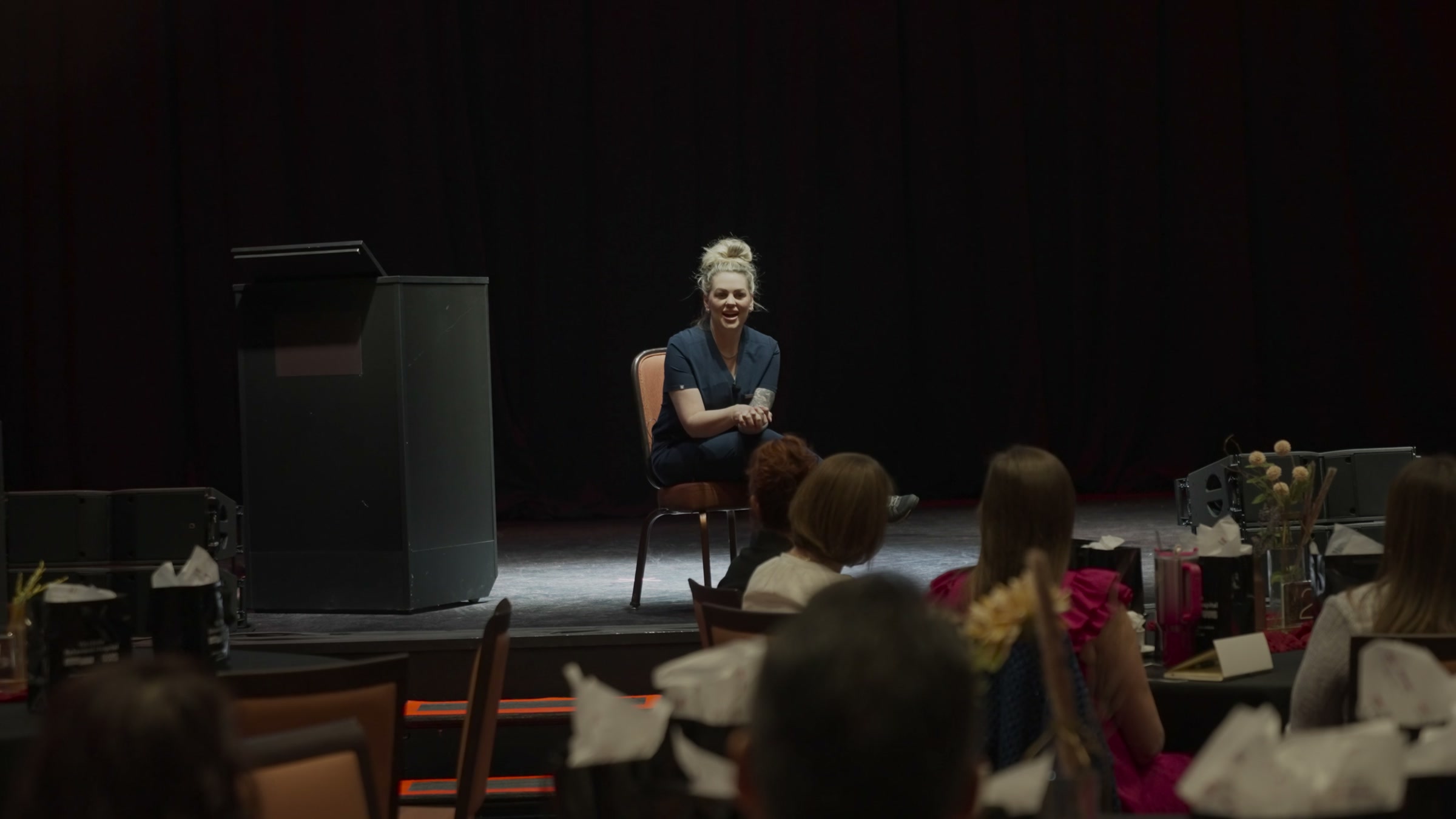
The cue, photographed. Screens black, audio out, one light.
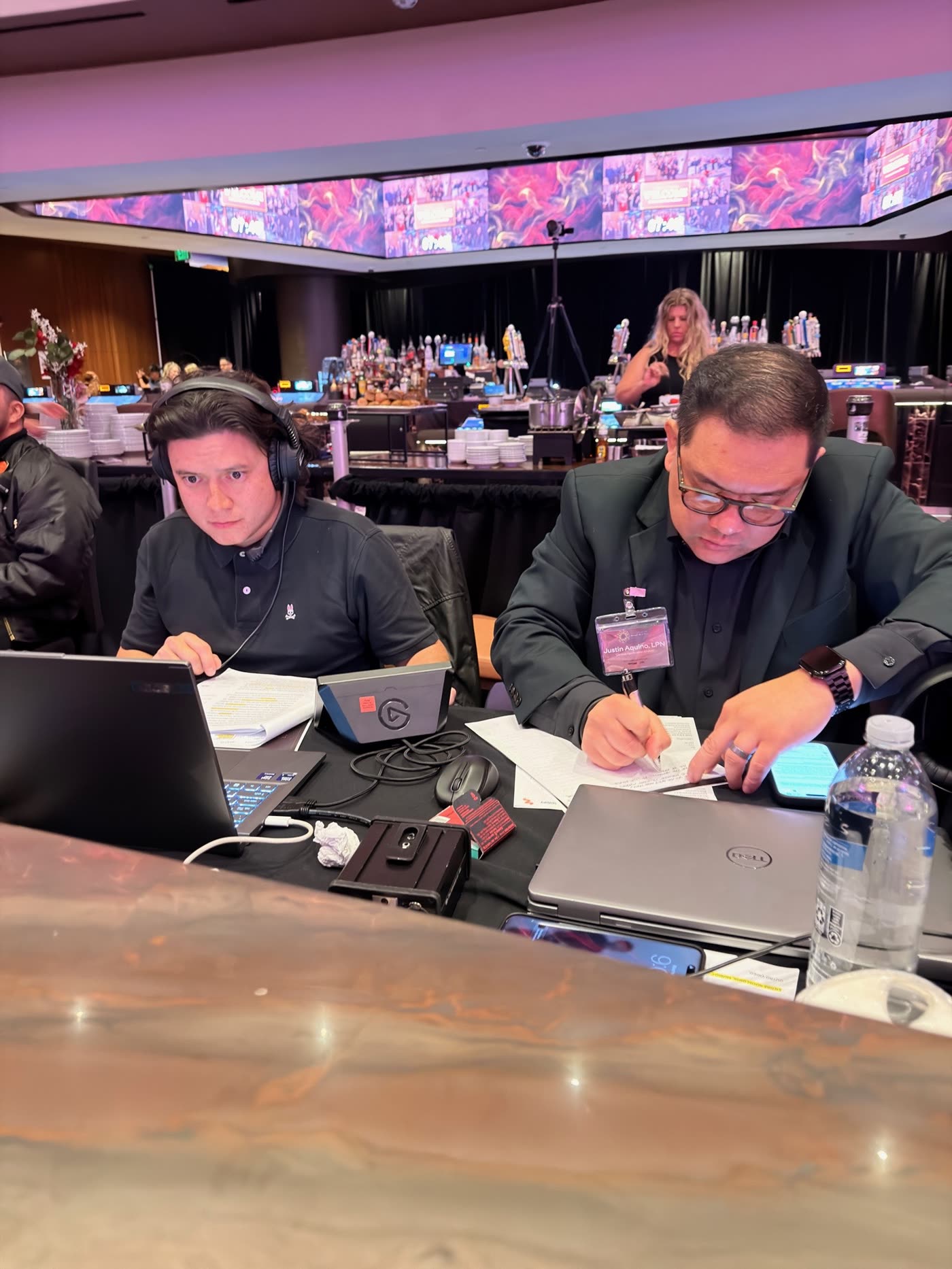
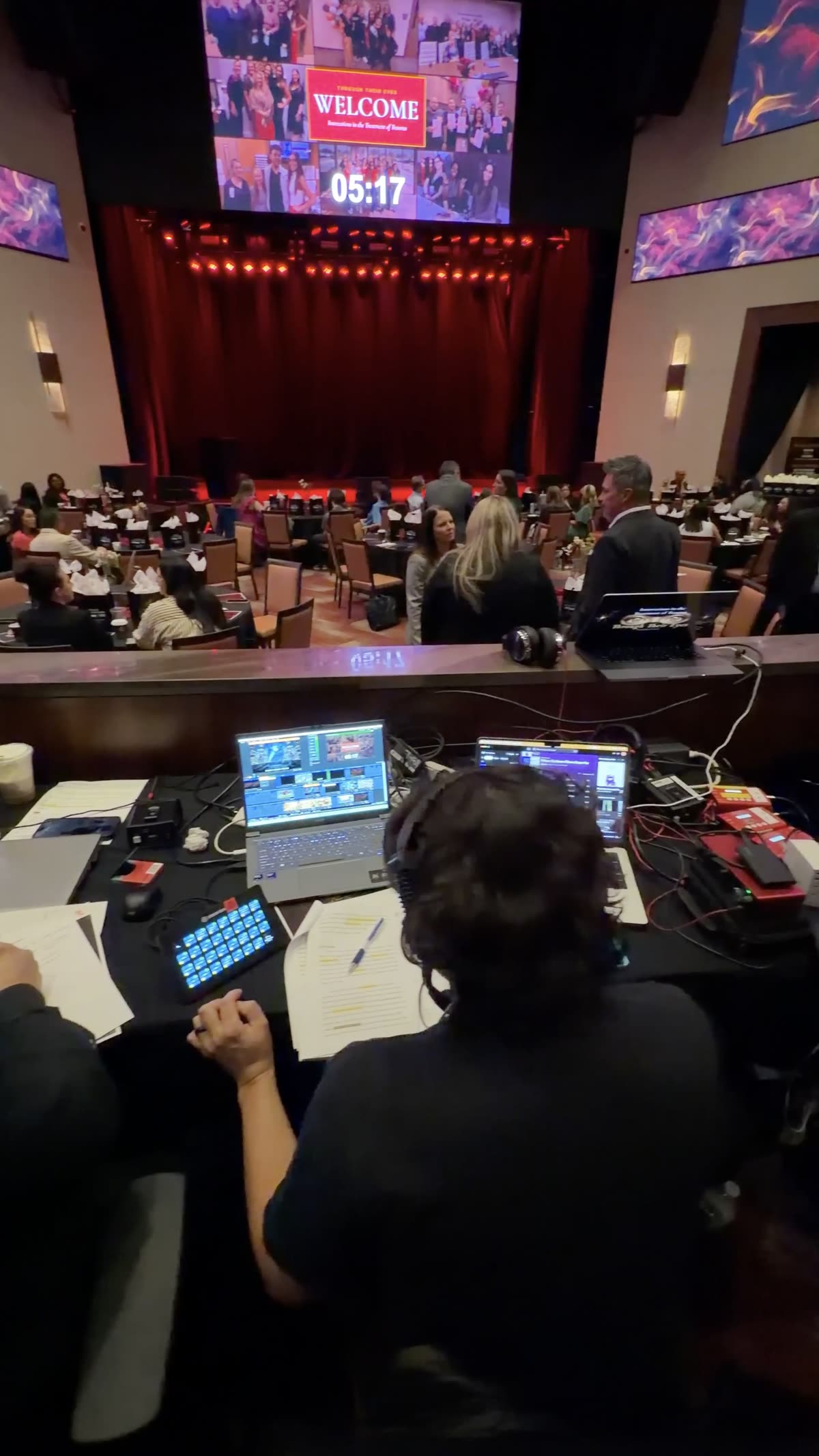
The booth. Headsets on, cue stack up, the whole day fired from a spacebar and a call sheet.
What Happened To You
The shirt went through three concepts. The one we killed had the old question struck through above the new one.
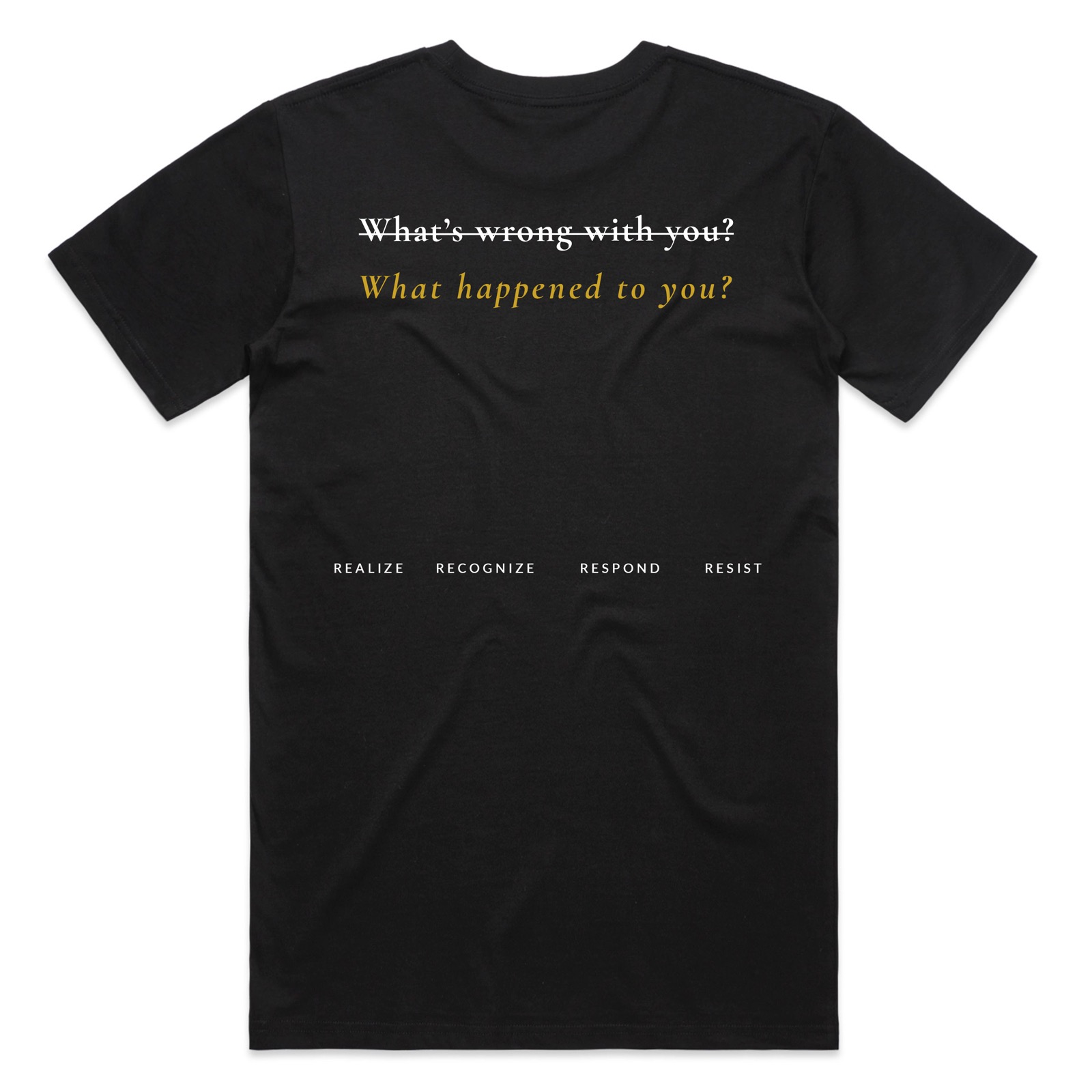
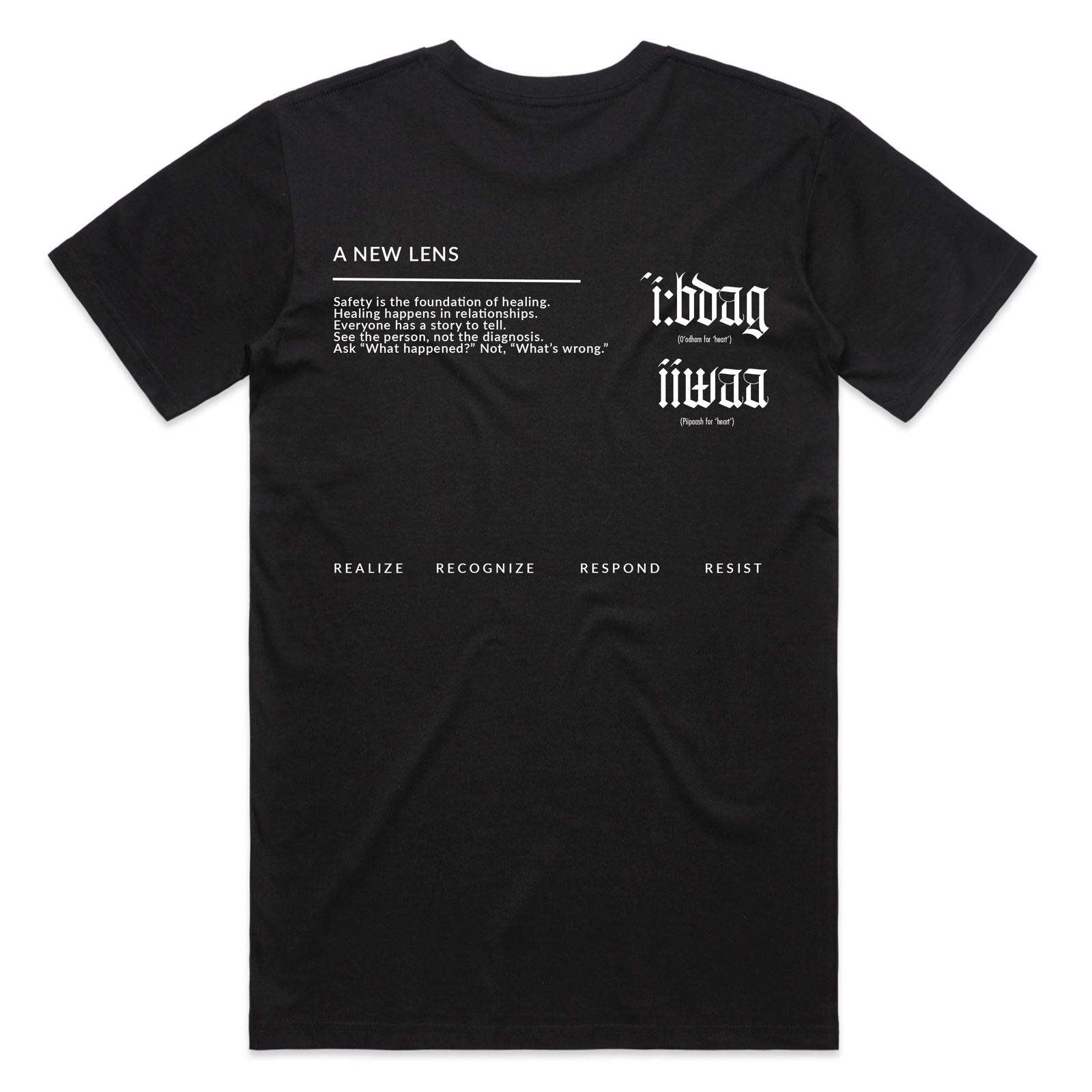
Killed, and shipped. The word for heart on the final back is set in O'odham and Piipaash, the languages of the land the venue stands on.
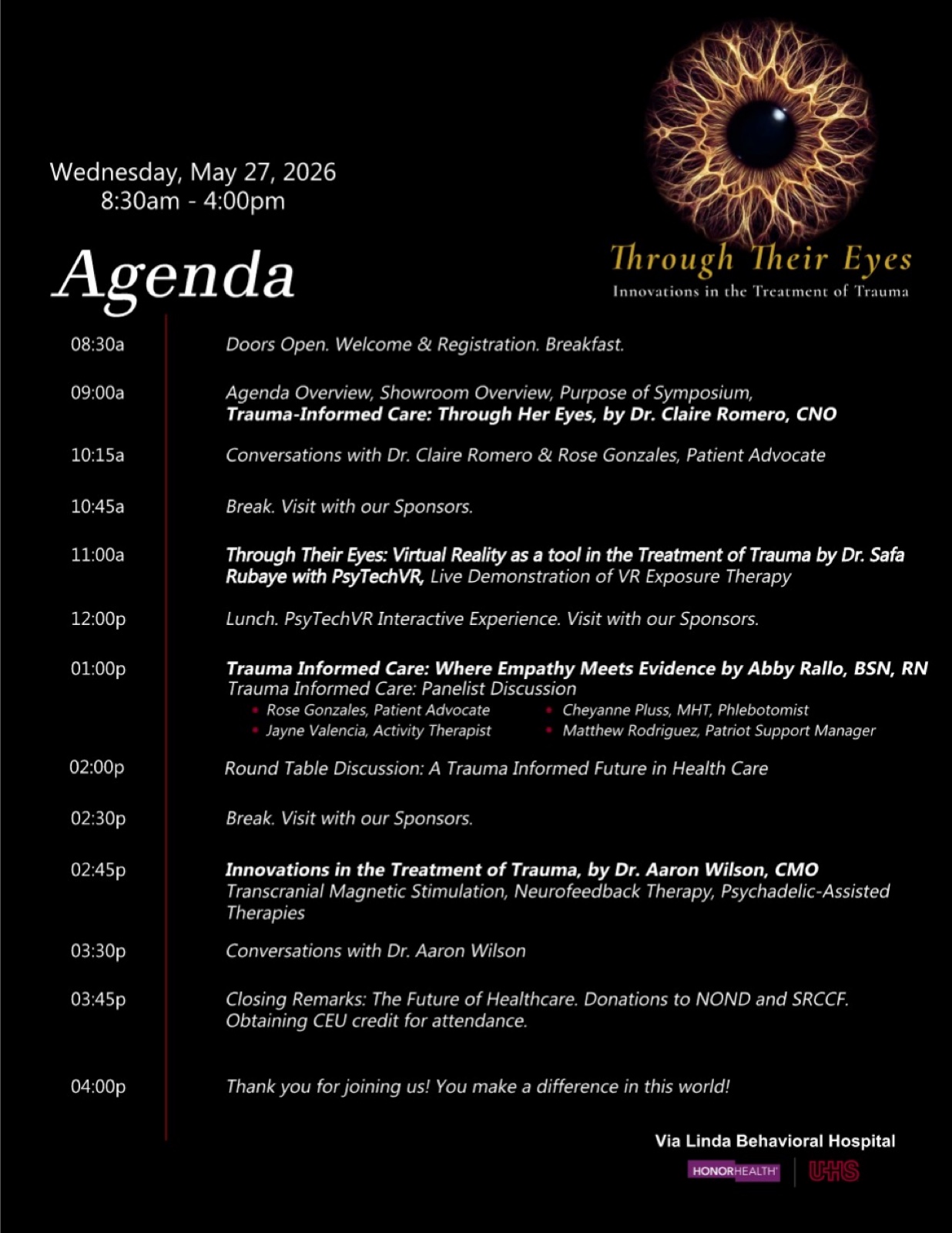
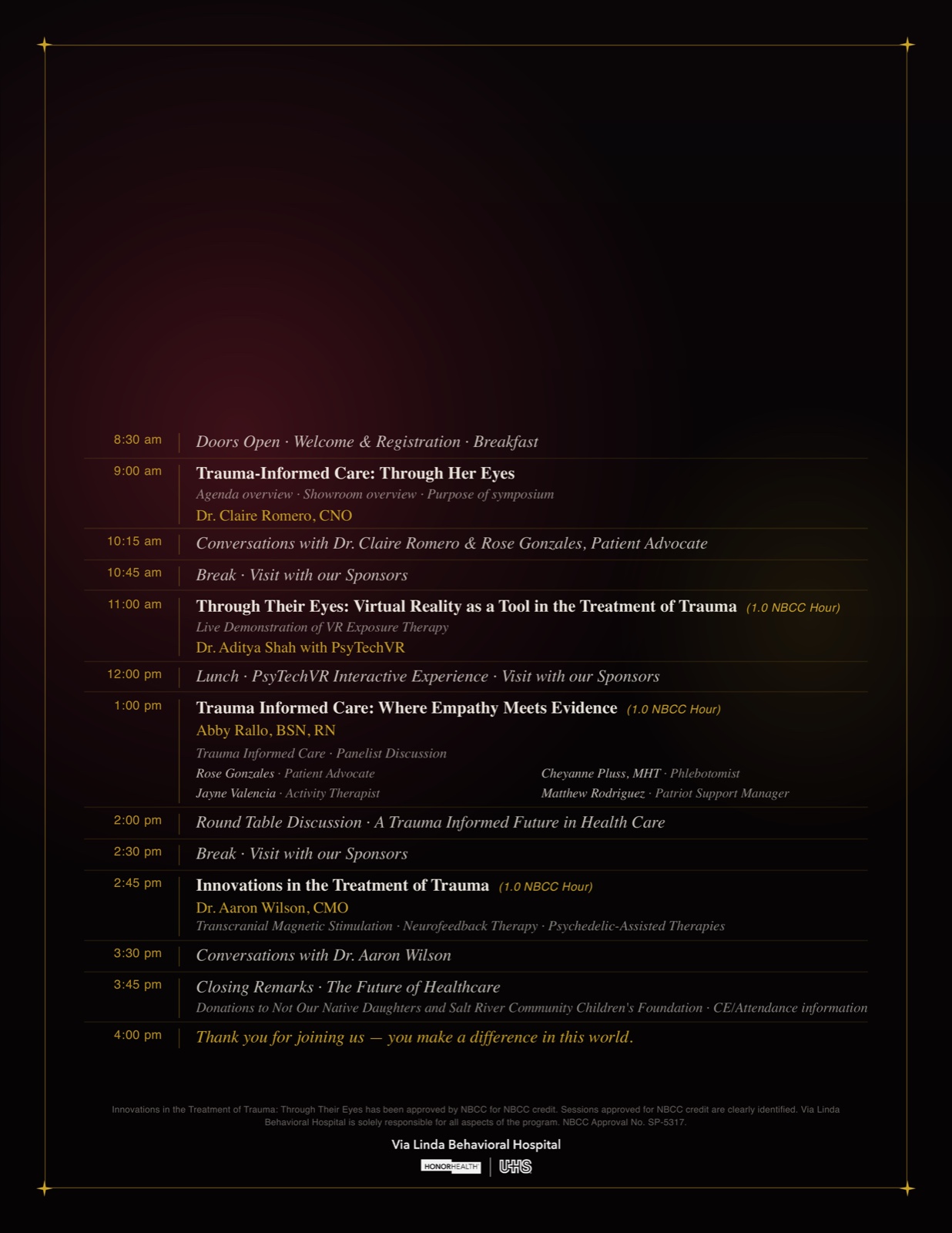
Paper went through the same door. The agenda as it arrived, and as it printed, thirteen versions later. The seating chart got the same treatment, down to a press ready plan of the room.
The Day Is Still Running
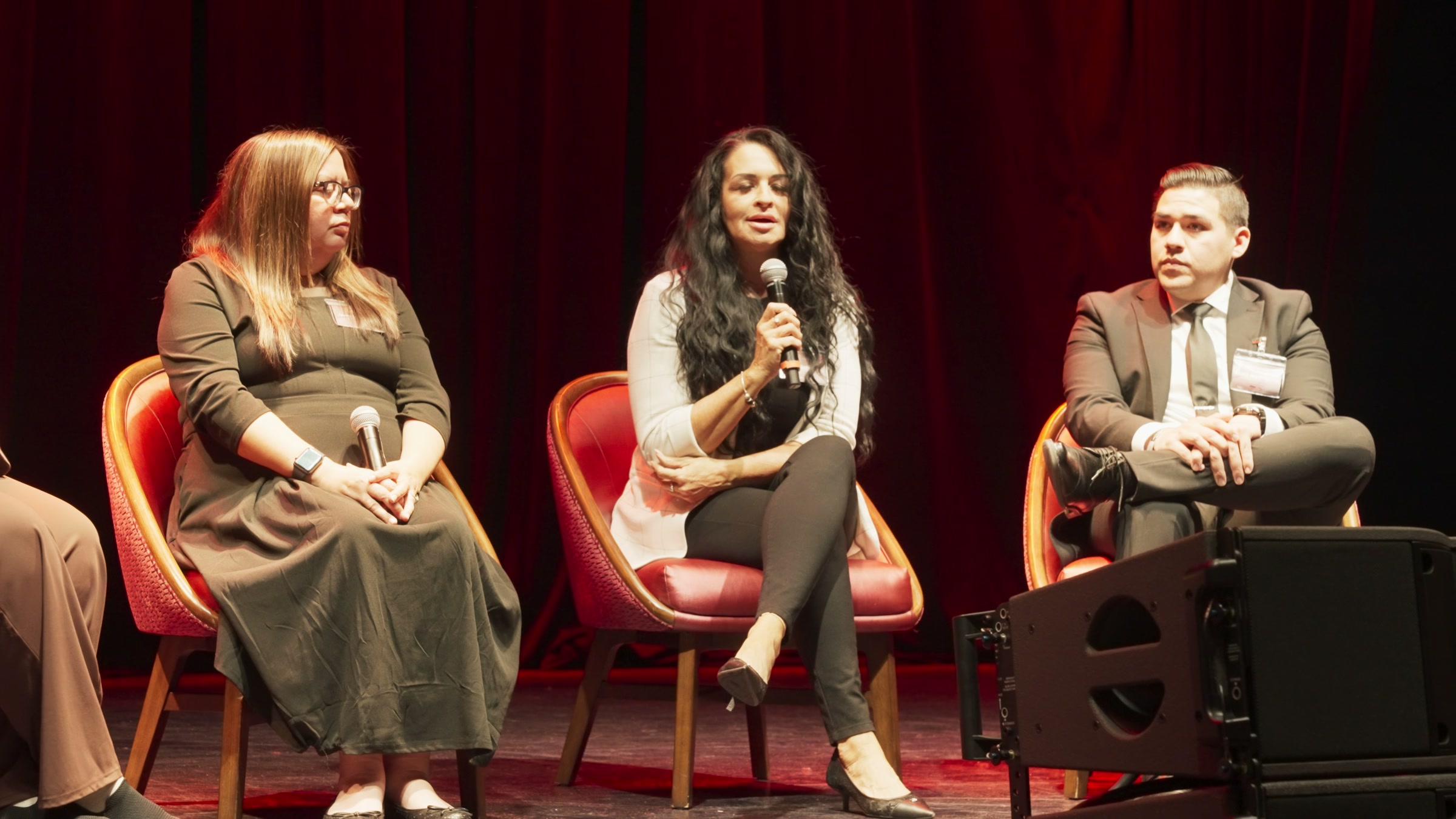
The whole day was filmed on two cameras and cut three ways: a full master for continuing education, a separate cut for each accredited module, and a segment for every individual speaker.
Then a recap film, so the client has a two minute answer to what the day was. The work that carried the room is now the work that carries the credit hours.
It was very well executed and full of current information.
The recap film, delivered a week after the room emptied.
Credits
SPRNTRL Visuals
Creative Direction
Concept and Identity
Motion and Film
Edit, Colour and Sound
Show Control Programming
Event Capture and Direction
Via Linda Behavioral Hospital
Event Direction
Clinical Program
Original Score
Talking Stick Resort
Venue and House AV